What are the 4 Pillars of SEO? (Building a Solid Foundation in 2026)
Search Engine Optimization in 2026 is no longer just about dropping keywords into a blog post and hoping for the best. With AI overviews, semantic search, and strict spam algorithms, ranking on Google requires a holistic, well-rounded approach.
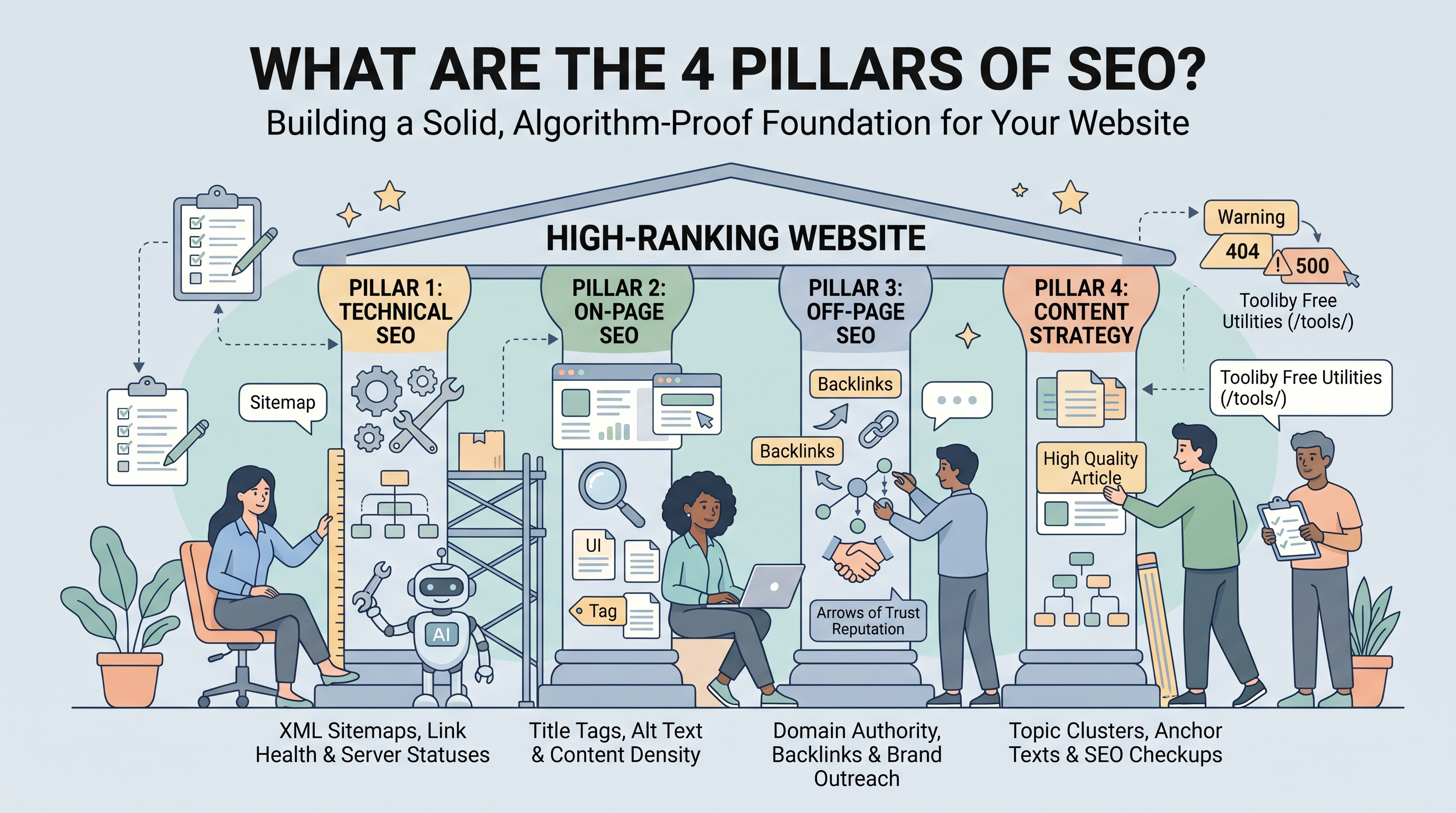
To achieve sustainable organic growth, you must build your website on the 4 Pillars of SEO: Technical SEO, On-Page SEO, Off-Page SEO, and Content Strategy. If any one of these pillars is weak, the entire structure collapses, and your rankings will suffer.
In this guide, we will break down each pillar, explain why it matters, and show you how to optimize them using the free digital tools available at Tooliby to build absolute topical authority in your niche.
Table of Contents
Pillar 1: Technical SEO (The Engine)
Technical SEO refers to the backend foundation of your website. It ensures that search engine bots can successfully discover, crawl, and index your pages. If Google cannot read your website, nothing else matters.
Key Elements of Technical SEO:
Crawlability & Indexation: Submitting clean XML sitemaps using the
XML Sitemap Generator and ensuring yourrobots.txtfile isn't blocking important pages.Site Speed & Core Web Vitals: Optimizing server response times and resolving response errors using the
HTTP Status Codes dashboard to guarantee flawless performance.Mobile-Friendliness: Ensuring your site is perfectly responsive on all devices.
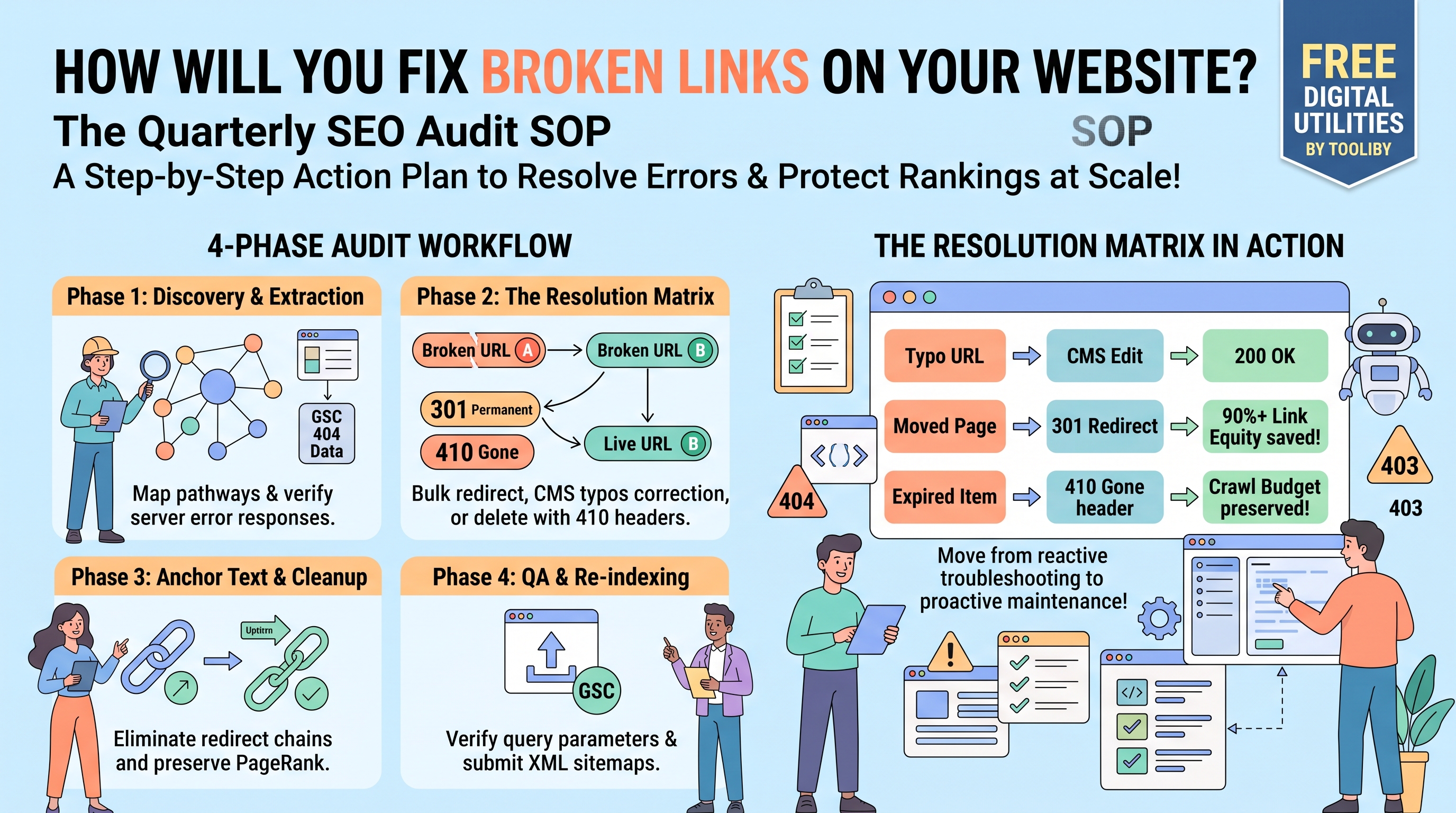
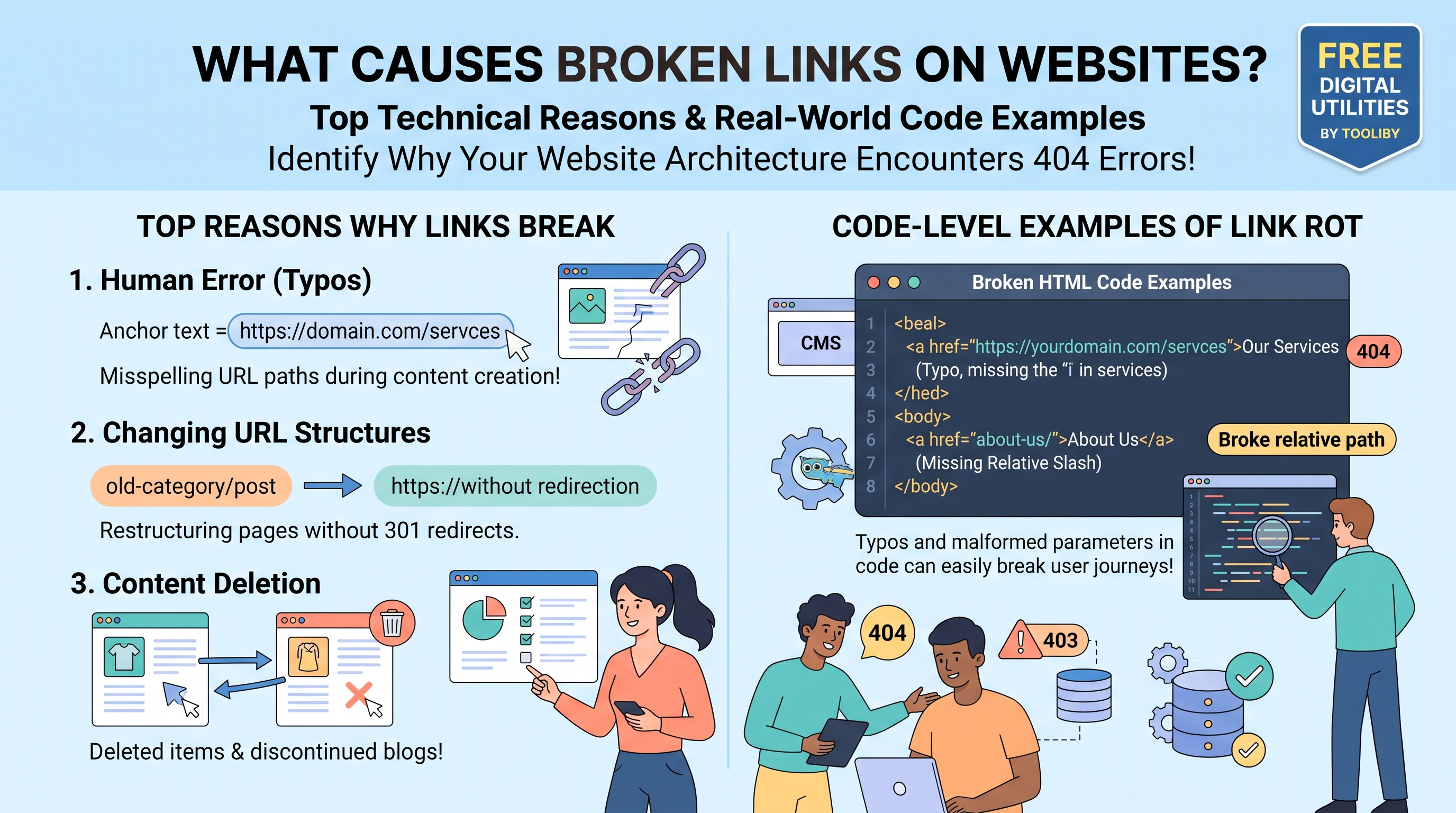
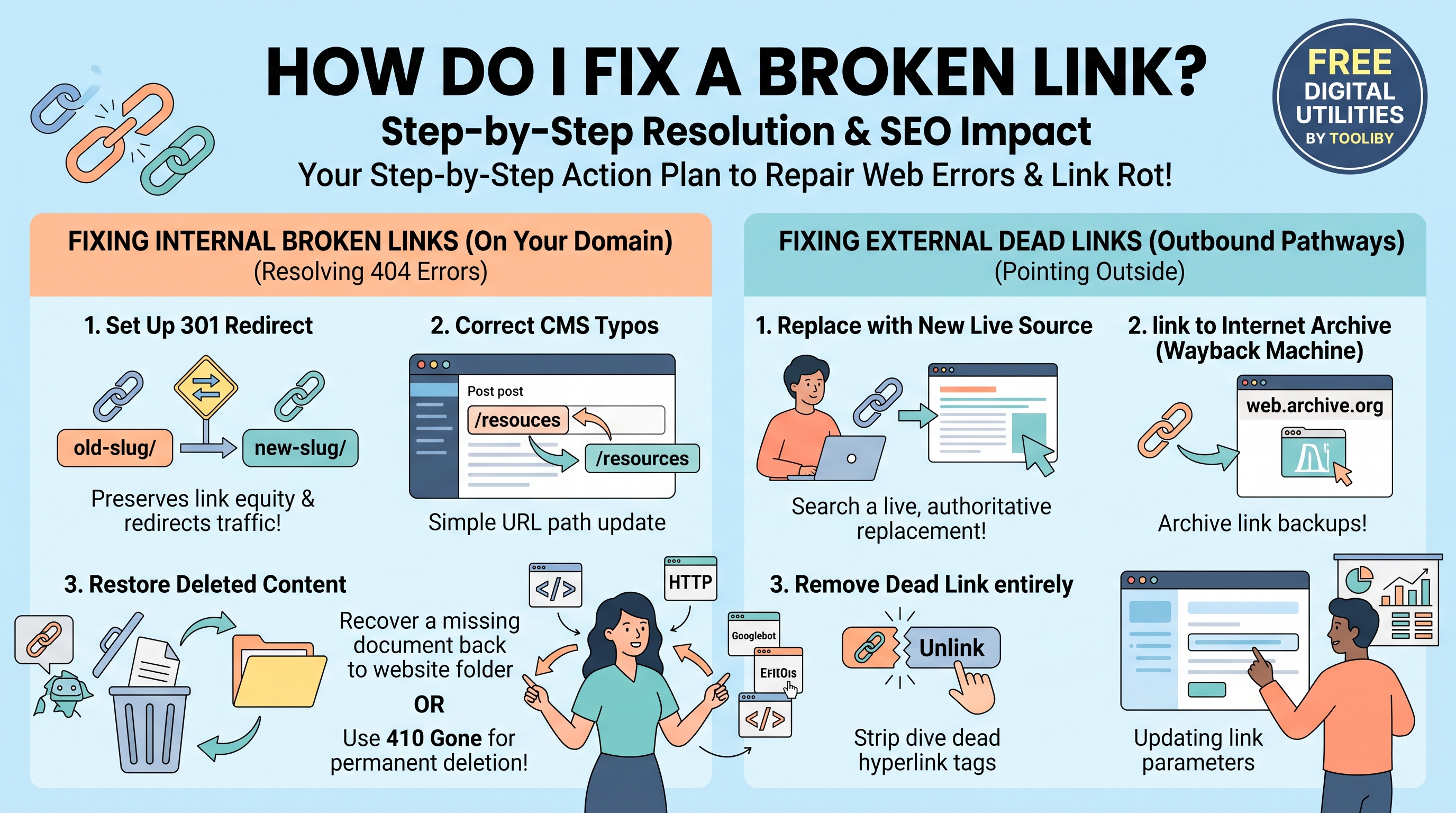
Link Health: Eliminating dead ends. A high number of 404 errors wastes your crawl budget. Check your connections instantly using the
Internal Links Finder . For resolving these, you can consult our detailed blueprint onhow to fix broken links on your website
Pillar 2: On-Page SEO (The Interior)
Once the search engine can crawl your site, On-Page SEO tells it what your site is about. This pillar focuses on optimizing the individual elements on your web pages to satisfy both search intent and search algorithms.
Key Elements of On-Page SEO:
Title Tags & Meta Descriptions: Crafting compelling, keyword-rich titles that drive high Click-Through Rates (CTR).
URL Structure: Keeping slugs short and descriptive using the
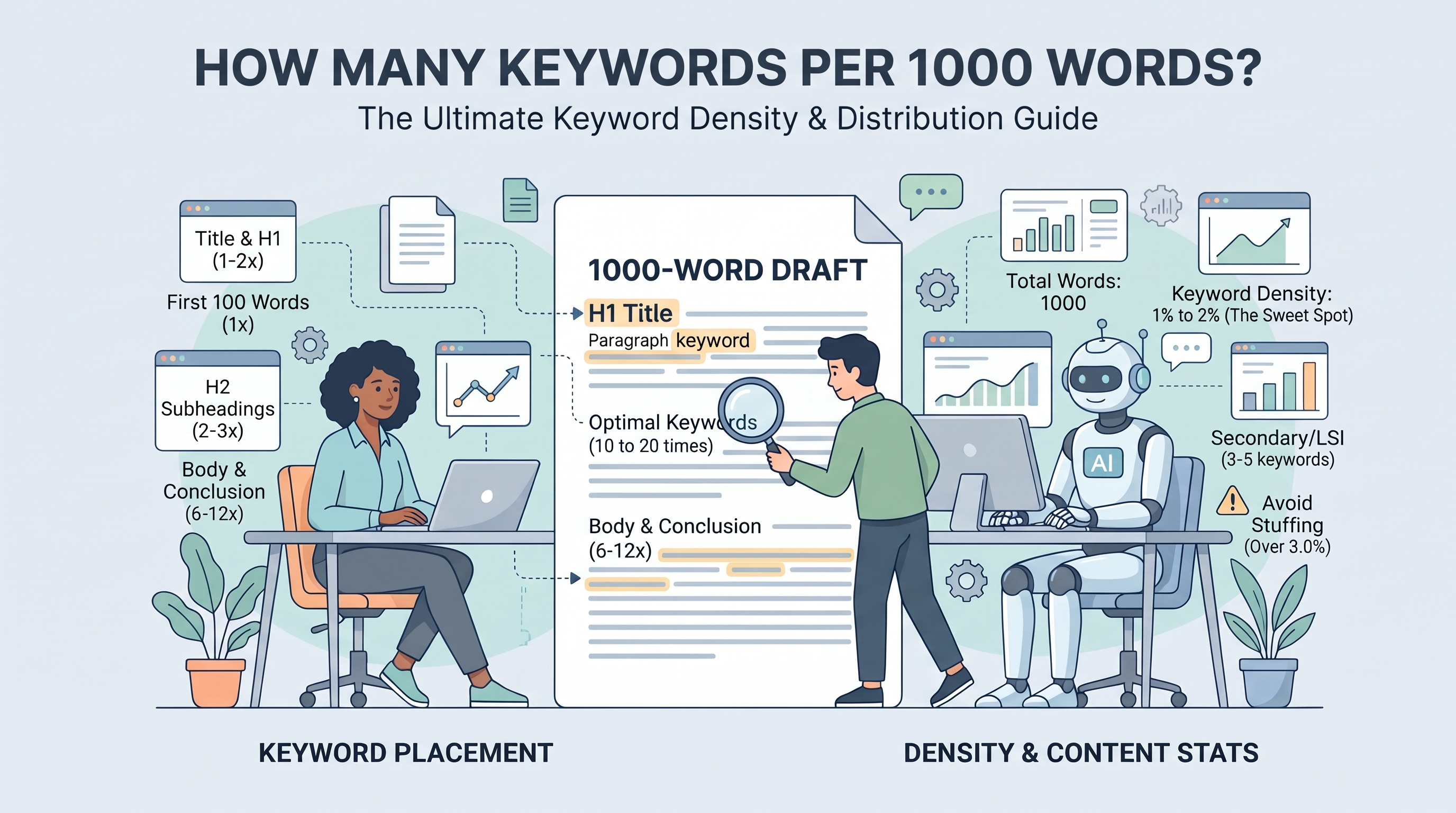
URL Parser to inspect parameters.Keyword Optimization: Placing keywords naturally in your H1, H2 subheadings, and early in your text. (Instead of worrying about exactly
how many keywords per 1000 words Image Alt Text: Describing visual elements for accessibility and image search rankings.
Before publishing, ensure your text meets competitive length and density targets. Use the free
Pillar 3: Off-Page SEO (The Reputation)
Off-Page SEO encompasses all the actions taken outside of your website to impact your rankings. It is how you prove to Google that your website is a trusted, authoritative source in your industry.
Key Elements of Off-Page SEO:
Backlink Building: Earning links from other high-quality websites. Yes,
backlinks still matter immensely in 2026 Domain Authority (DA): A metric that predicts how well your site will rank. Growing your site's reputation takes time, but there are proven blueprints to
increase your Domain Authority Brand Mentions & Social Signals: Driving branded searches (when users search for your brand name specifically) and maintaining active profiles across platforms like LinkedIn and Pinterest.
Local SEO: Managing your Google Business Profile and local citations if you serve a specific geographic area.
Pillar 4: Content Strategy (The Fuel)
The final pillar is the fuel that powers the entire system. Content strategy goes beyond basic on-page tweaks; it involves planning, structuring, and producing content that establishes you as an undisputed expert.
Key Elements of Content Strategy:
Topical Authority: Creating interconnected clusters of content (Pillar Pages and Supporting Blogs) that cover a subject exhaustively.
Search Intent: Writing content that answers exactly what the user is looking for (informational, transactional, or navigational).
The 80/20 Rule: Understanding that 20% of your content will likely drive 80% of your traffic, meaning you must
focus your SEO efforts efficiently Anchor Text Profiles: Validating the anchor text used to link your topic clusters using the
Anchor Text Analyzer .Content Freshness: Regularly updating old tools and blogs to ensure the information remains accurate and competitive.
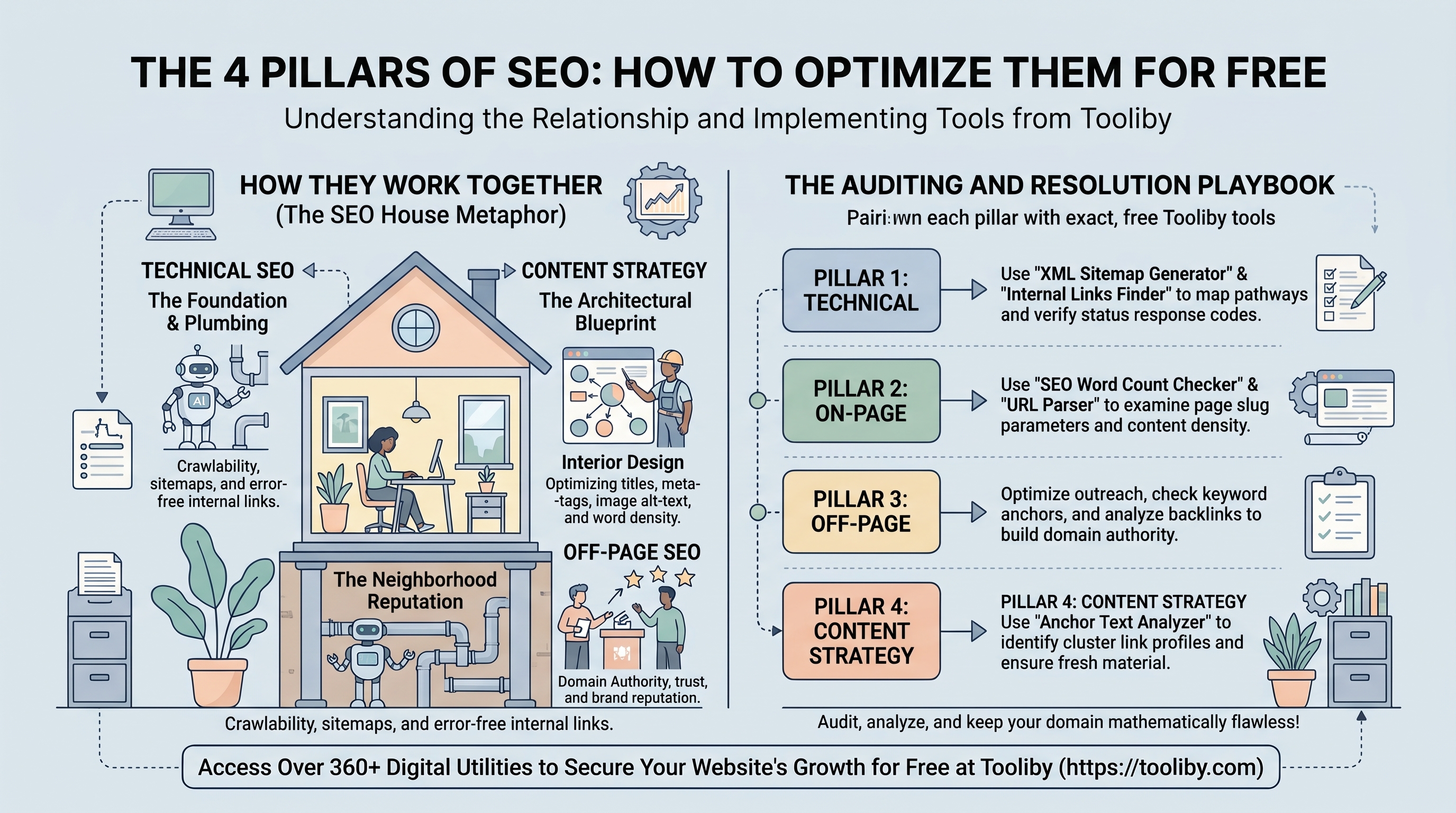
How the 4 Pillars Work Together
Think of SEO like building a house:
Technical SEO is pouring the concrete foundation and setting up the plumbing.
Content Strategy is the architectural blueprint deciding how many rooms you need.
On-Page SEO is painting the walls and arranging the furniture so guests know exactly what each room is for.
Off-Page SEO is the neighborhood's word-of-mouth reputation telling people that your house is the best one on the block.
You cannot ignore one pillar and expect the others to compensate. A site with great content but a broken technical foundation will never be crawled. A fast site with zero backlinks will struggle to outrank established competitors. Success requires balance.
Frequently Asked Questions (FAQs)
1. Which of the 4 SEO pillars is the most important?
None of them can function independently, but Technical SEO is the absolute prerequisite. If your site is not indexable, the best content and backlinks in the world will not save you.
2. Can I do SEO by myself in 2026?
Yes! While technical SEO can get complicated, platforms with built-in optimizations make it easier. By utilizing free digital utilities on Tooliby and following structured guides, you can definitely manage the four pillars independently.
3. How long does it take for these pillars to show results?
SEO is a long-term game. Technical fixes can show results in a few weeks as Google recrawls the site, but Content and Off-Page SEO typically take 3 to 6 months to yield significant traffic changes.
What Is Tooliby Blog?
Tooliby Blog is a free publication covering developer tools, SEO, AI prompts and productivity — written by real practitioners who use these tools daily. No paywall, no account needed. Just practical content you can act on.
Can I share this article?
Yes — use the share buttons above to post on Twitter, LinkedIn, Facebook or WhatsApp. The more people read it, the better.
How do I write for Tooliby?
Click Write for Us and submit your article. We review within 48 hours and publish with full author credit and bio.