What is the Difference Between Keyword Stuffing and Keyword Density? (Safe SEO Guidelines 2026)
If you want to rank on the first page of Google in 2026, understanding how search engines read your text is critical. For years, beginners have confused two highly important concepts: Keyword Density and Keyword Stuffing. While one is a helpful metric to measure content relevance, the other is a toxic practice that will trigger Google’s spam algorithms and completely destroy your rankings.
So, where is the line between optimizing a page and spamming a search engine?
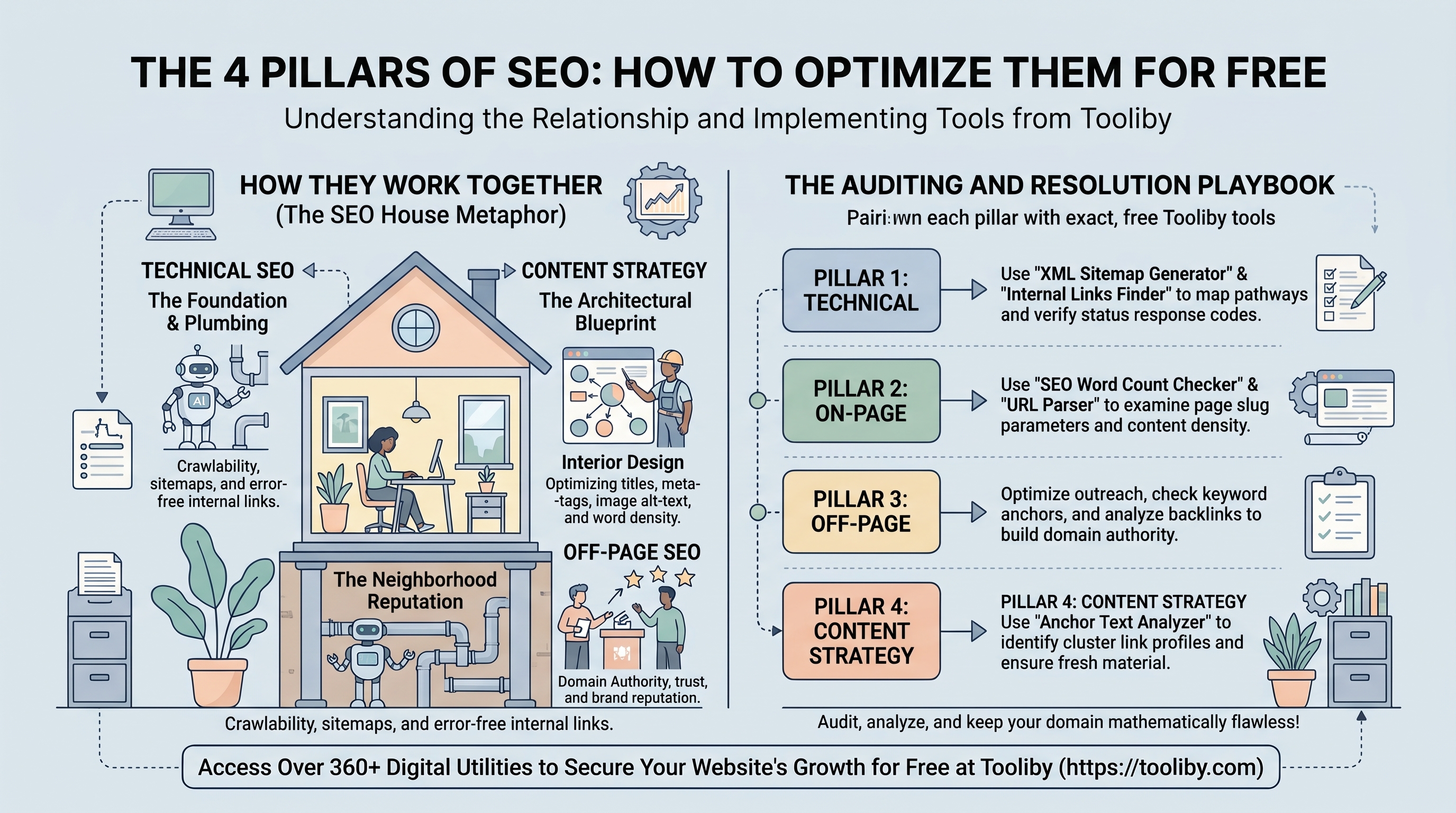
In this guide, we will break down the exact difference between keyword stuffing and keyword density, how to survive modern Google spam updates, and how to use free digital utilities to keep your content mathematically safe.
Table of Contents
What is Keyword Density? (The Metric)
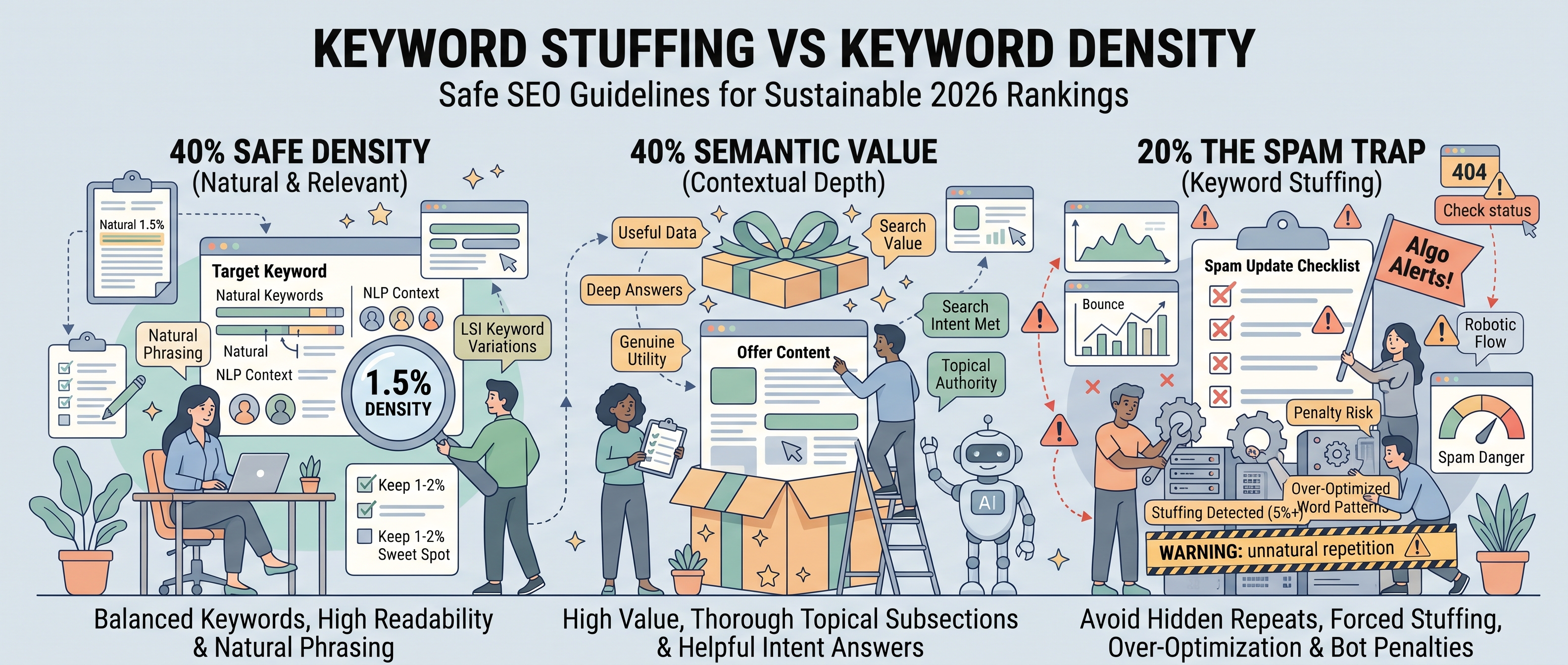
Keyword Density is a simple mathematical percentage that represents how many times your target keyword appears on a webpage compared to the total word count.
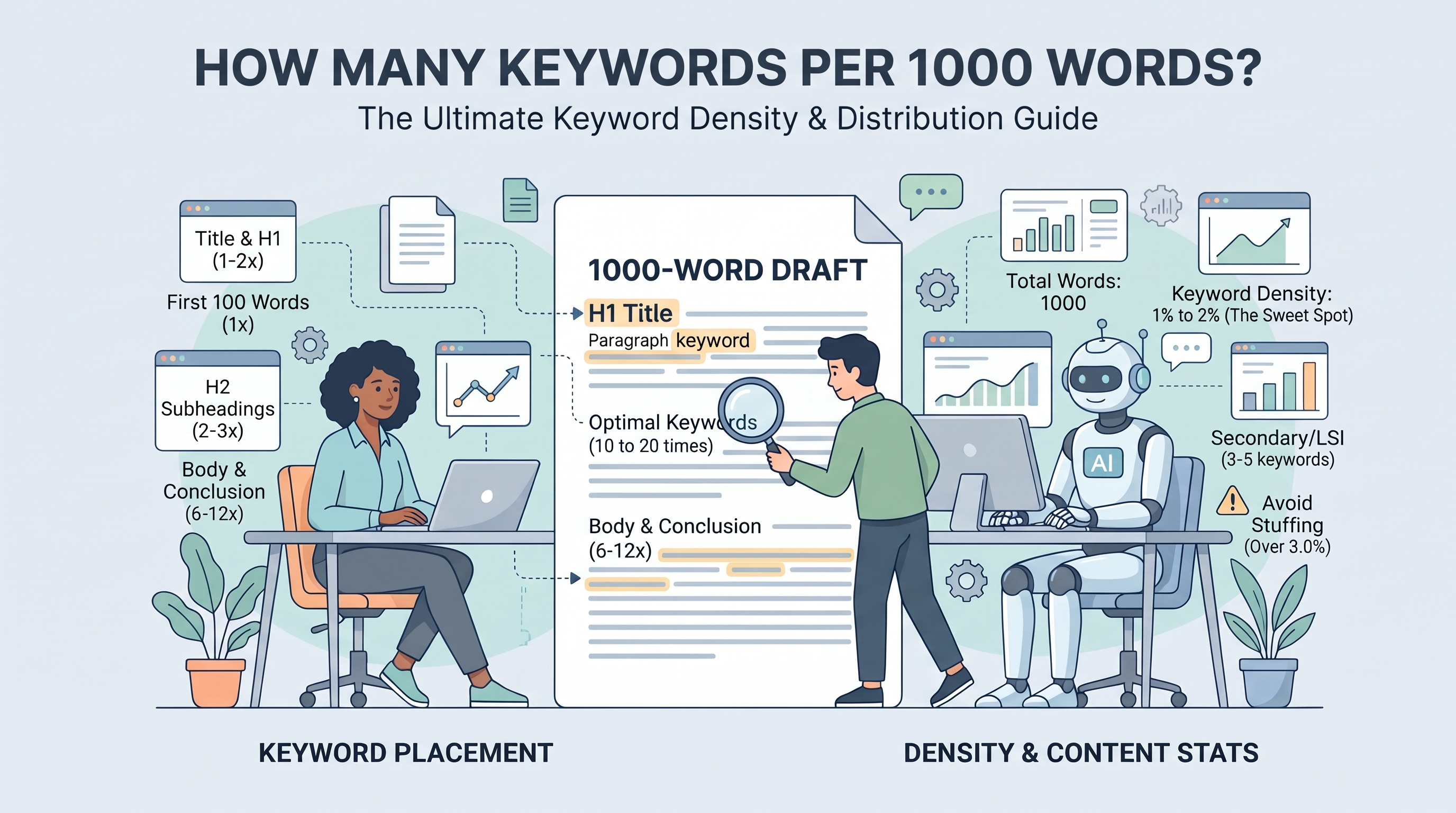
For example, if you write a 1,000-word article and mention your target phrase 15 times, your keyword density is 1.5%. Historically, SEO experts recommended keeping this number between 1% and 2%.
Today, keyword density is not a hard rule you must blindly follow, but rather a diagnostic metric. It helps you verify that you haven't strayed off-topic. If your density is 0%, Google might not realize what your page is about. If it is 1.5%, the search engine clearly understands your topic, provided the phrasing flows naturally within the context of the sentence.
What is Keyword Stuffing? (The Spam Trap)
Keyword Stuffing is the unnatural, forced repetition of a target keyword in an attempt to manipulate search engine rankings. It completely ruins the user experience and makes the text sound robotic.
Example of Keyword Stuffing:
"If you are looking for the best cheap laptops, we have the best cheap laptops in our store. Our best cheap laptops are perfect for students who need the best cheap laptops for school."
In 2026, Google's advanced Natural Language Processing (NLP) models can instantly detect this behavior. Instead of boosting your rank, keyword stuffing triggers algorithmic penalties, causing your page to be de-indexed or pushed to page 50 of the search results. This toxic practice violates all the core principles of the
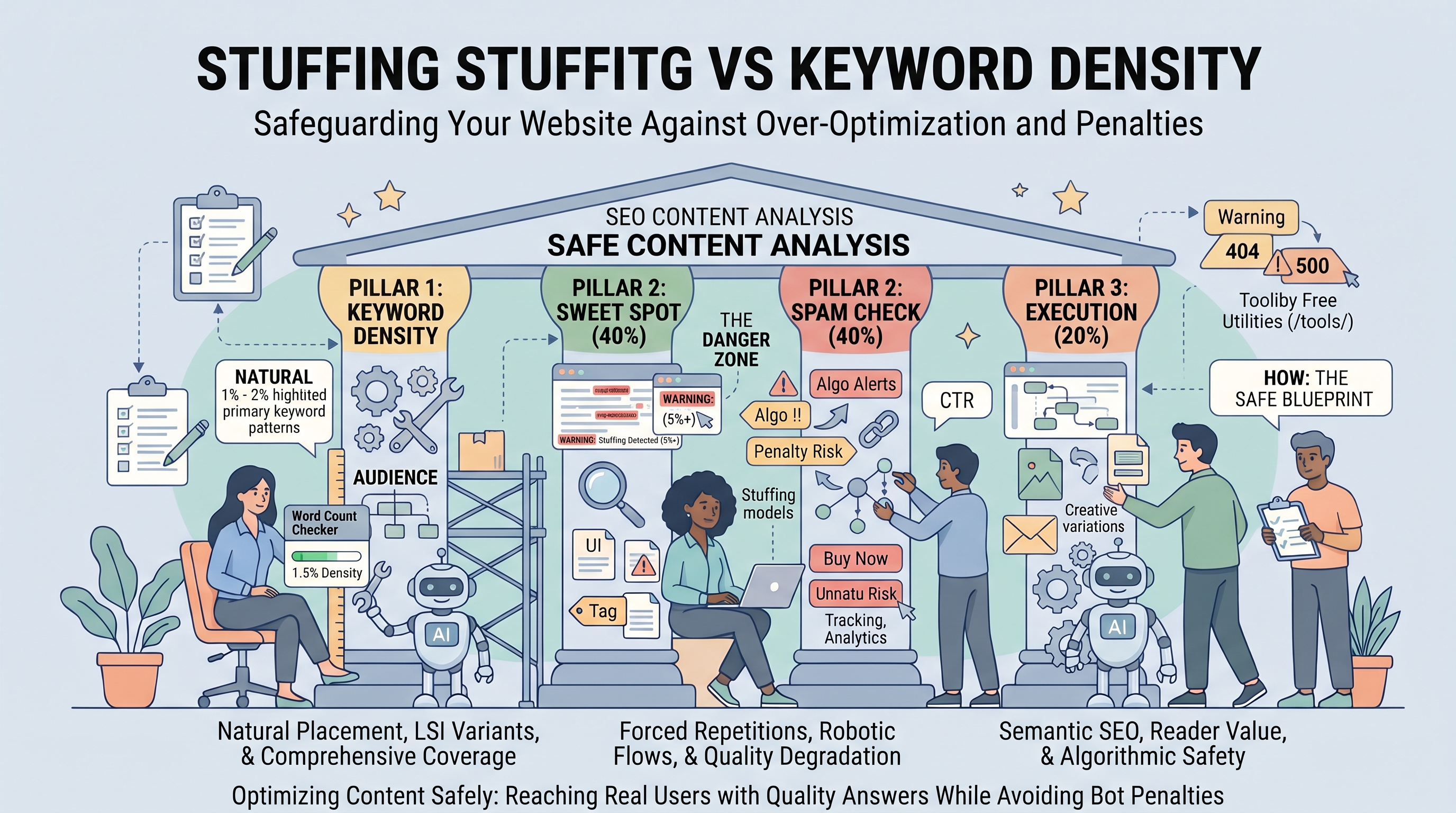
How to Avoid Google Spam Updates in 2026
Google rolls out massive spam updates several times a year. To protect your website from being penalized, you must adopt a modern, semantic approach to writing:
Write for Humans First: Read your draft out loud. If a sentence sounds awkward or forced, rewrite it.
Use LSI Keywords (Synonyms): Instead of repeating "digital marketing agency," use conceptually related terms like "online advertising firm," "SEO consultants," or "internet marketing services."
Audit Your Anchor Texts: Keyword stuffing doesn't just happen in paragraphs; it happens in links too. Use the
Anchor Text Analyzer to ensure your internal links use natural, varied phrasing rather than exact-match spam.
The Secret: Targeting Ultra-Low Competition Keywords
One of the main reasons beginners resort to keyword stuffing is because they are desperately trying to rank for highly competitive terms (e.g., "best credit cards").
You can bypass this struggle entirely by shifting your strategy to ultra-low competition keywords. These are highly specific, zero-volume, long-tail queries that massive publishers ignore.
When you target an ultra-low competition phrase (e.g., "how to fix a broken credit card chip at home"), you do not need a high keyword density to rank. Simply answering the specific question thoroughly is enough to dominate the SERPs, effortlessly aligning with the
How the Tooliby Word Count Checker Keeps You Safe
Before you hit publish on any blog post, you should mathematically verify that your content falls into the safe zone. This is where the
This free digital utility goes far beyond basic word counting. It allows you to:
Check Exact Density: See exactly how many times your primary keyword appears. If the tool warns you that a phrase is used 40 times in 500 words, you know you need to edit it before Google flags it.
Analyze Readability: It breaks down paragraph density and sentence length, ensuring your text is readable and engaging for human users.
Benchmark Competitors: Paste your competitor's text into the tool to see what density is currently ranking on page one, then match their natural formatting without crossing into spam territory.
Frequently Asked Questions (FAQs)
1. Is there an exact keyword density percentage I should aim for in 2026?
No. While 1% to 2% is a safe historical benchmark, modern SEO relies on topic comprehensiveness rather than strict mathematical density. Focus on natural language and semantic variations instead.
2. Can I get penalized for keyword stuffing in image alt text?
Absolutely. Stuffing keywords into image alt tags, meta descriptions, or hidden CSS text will trigger the exact same Google spam penalties as stuffing them into your main body paragraphs.
3. What is the difference between keyword stuffing and LSI keywords?
Keyword stuffing is repeating the exact same phrase unnaturally. LSI (Latent Semantic Indexing) keywords are different, conceptually related words that help search engines understand the broader context of your page without sounding spammy.
What Is Tooliby Blog?
Tooliby Blog is a free publication covering developer tools, SEO, AI prompts and productivity — written by real practitioners who use these tools daily. No paywall, no account needed. Just practical content you can act on.
Can I share this article?
Yes — use the share buttons above to post on Twitter, LinkedIn, Facebook or WhatsApp. The more people read it, the better.
How do I write for Tooliby?
Click Write for Us and submit your article. We review within 48 hours and publish with full author credit and bio.