What is the 40-40-20 Rule in Marketing? (How It Applies to SEO & Content)
If you are pouring hours into perfecting the design of your blog but still struggling to get organic traffic, you might be prioritizing the wrong tasks. In the digital marketing world, success rarely comes from guessing. Instead, industry experts rely on proven time-allocation frameworks to guarantee a high Return on Investment (ROI).
One of the most powerful and time-tested frameworks is the 40-40-20 Rule of Direct Marketing. Originally developed by marketing pioneer Ed Mayer, this rule was built for traditional mail campaigns, but it applies flawlessly to modern search engine optimization and content strategy.
In this guide, we will break down what the 40-40-20 rule is, how to prioritize SEO tasks efficiently, and how to apply this effort allocation strategy to build absolute topical authority in your niche.
Table of Contents
What is the Ed Mayer 40-40-20 Marketing Rule?
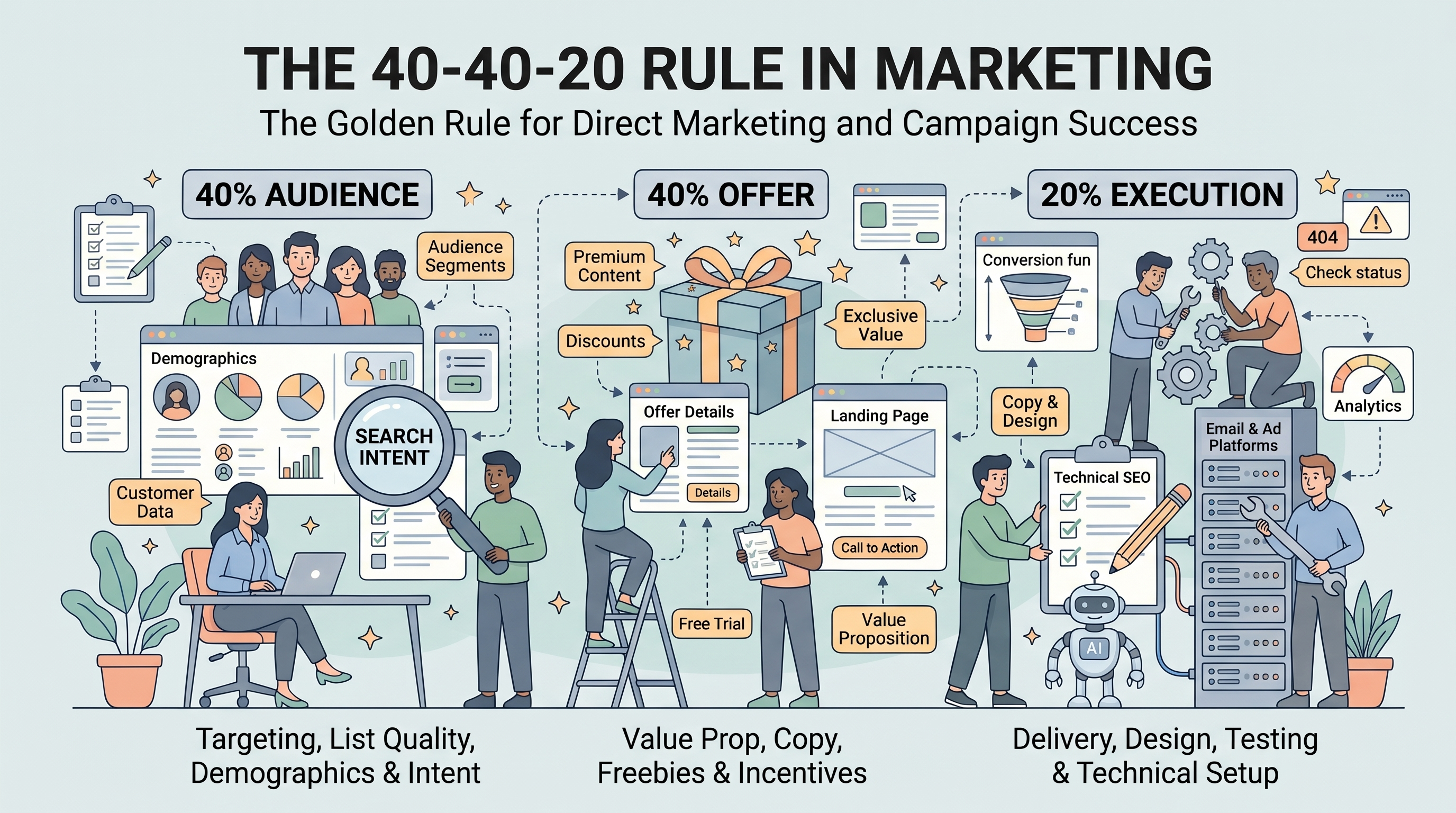
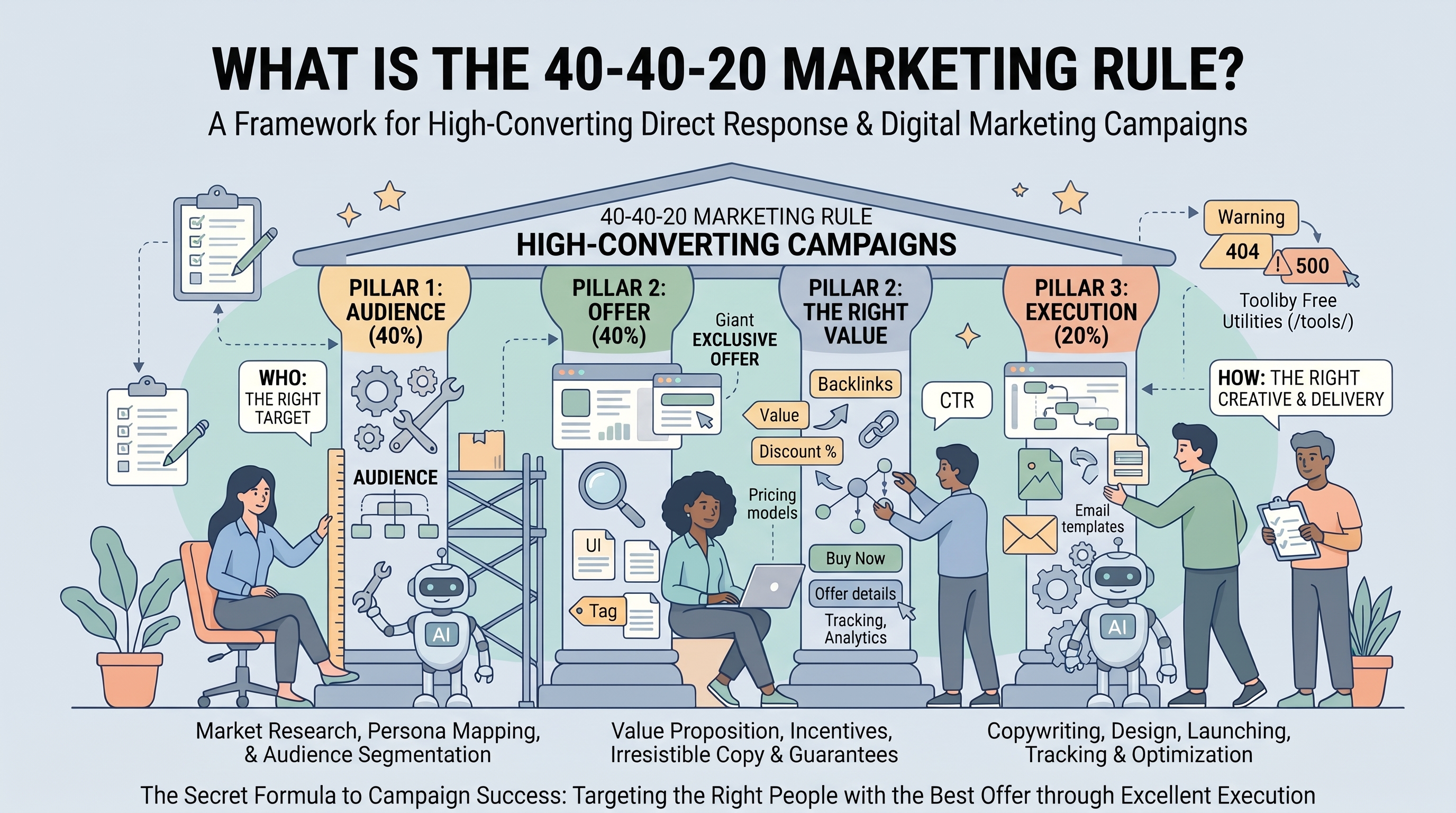
Ed Mayer's rule states that the success of any promotional campaign depends on three distinct pillars, weighted by their percentage of importance:
40% Audience: Reaching the absolute right people (targeting).
40% Offer: Giving them exactly what they want or need (the value proposition).
20% Execution: The creative presentation, copywriting, and formatting.
Most beginners invert this rule. They spend 80% of their time adjusting fonts, tweaking images, and stressing over minor technical metrics (the 20%), while completely ignoring what their audience is actually searching for. If you offer a terrible solution to the wrong audience, the most beautifully designed website in the world will not save you.
The First 40%: Audience, Search Intent & Targeting
The most critical 40% of your SEO success dictates that who you target matters far more than what you say. In SEO, your "audience targeting" directly translates to keyword research and understanding Search Intent.
If you write a brilliant 3,000-word article but target a highly competitive keyword that your new website cannot rank for, your traffic will remain zero.
Ultra-Low Competition Keywords: Spend your time hunting for zero-volume, long-tail, and low-competition search queries. These are the hidden gems that larger websites ignore but highly targeted users search for.
Search Intent: Are they looking for information, or do they want to buy a product? Match your content to their exact need.
Crawlability: Make sure your carefully targeted audience can actually find your content on search engines by regularly updating and submitting clean maps via the
XML Sitemap Generator .
The Second 40%: The Offer & Content Strategy
The next 40% focuses on the solution you provide. In content marketing, your "offer" is the actual blog post, guide, or free browser utility you have built.
Google’s 2026 algorithms heavily penalize superficial, thin content. If a user clicks your link and your article doesn't solve their problem better than the competitors, they will bounce back to the search results, tanking your rankings.
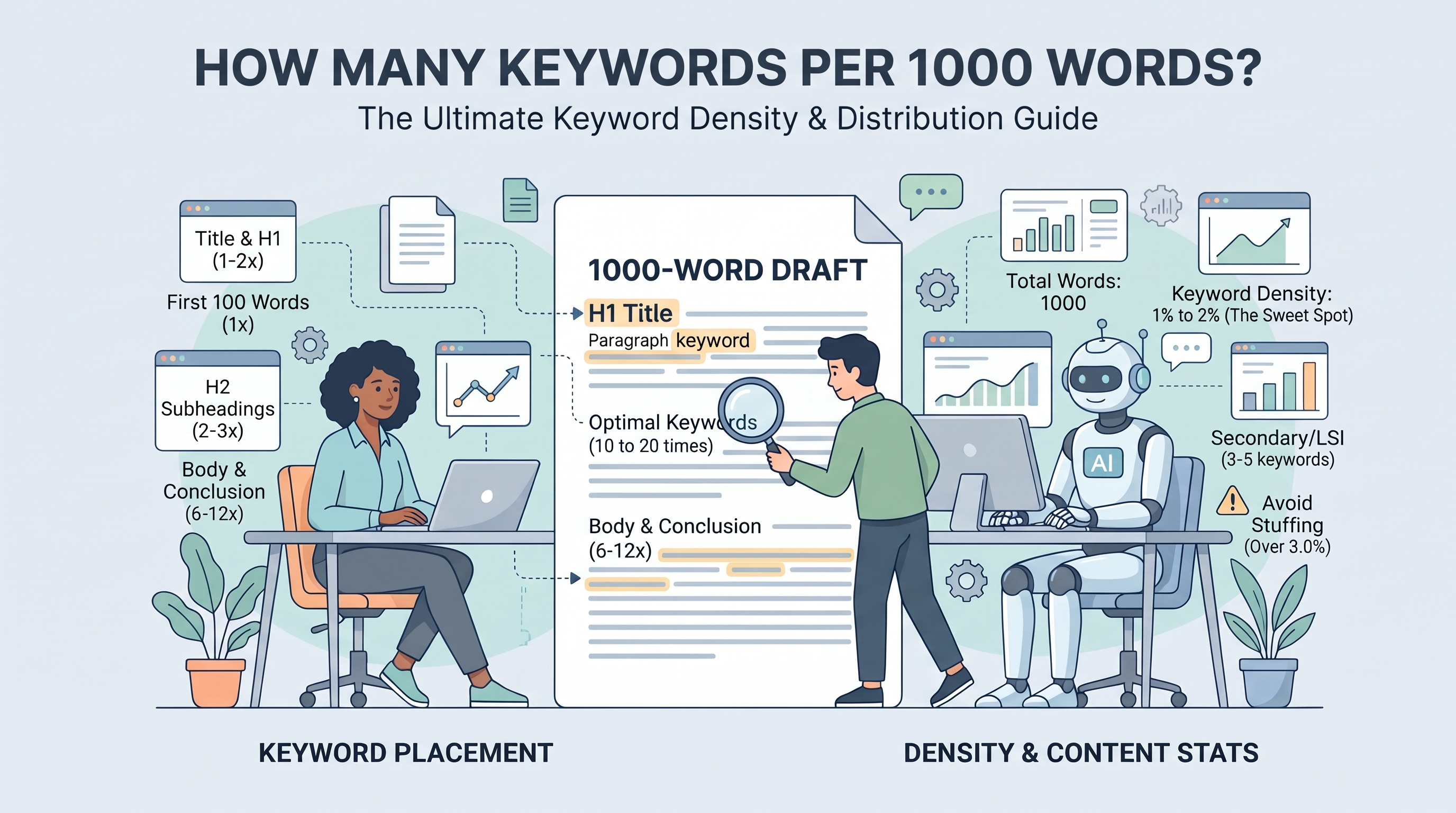
Content Depth: Ensure your article is deeply comprehensive. Benchmark your draft's length and sentence density against top-ranking pages using the
SEO Word Count Checker to ensure you aren't publishing "thin content."Site Architecture: Provide additional value by guiding users to related helpful resources. A strong content offer keeps users engaged. Map out these pathways efficiently with the
Internal Links Finder .
The Final 20%: Technical Execution & Creative Design
The final 20% is the execution—the meta descriptions, the UI/UX design, the site speed, and the technical SEO health.
While it has the smallest percentage weight, a broken execution can completely destroy the first 80%. If your site takes 10 seconds to load or throws a server error, the audience will leave before they even see your offer.
Server Health: Continuously monitor your server’s uptime and ensure you aren't losing traffic to transient 5xx errors by checking your dashboard via the
HTTP Status Codes Analyzer .Formatting: Break up long walls of text with H2 and H3 subheadings, bullet points, and infographics to keep the creative presentation highly scannable.
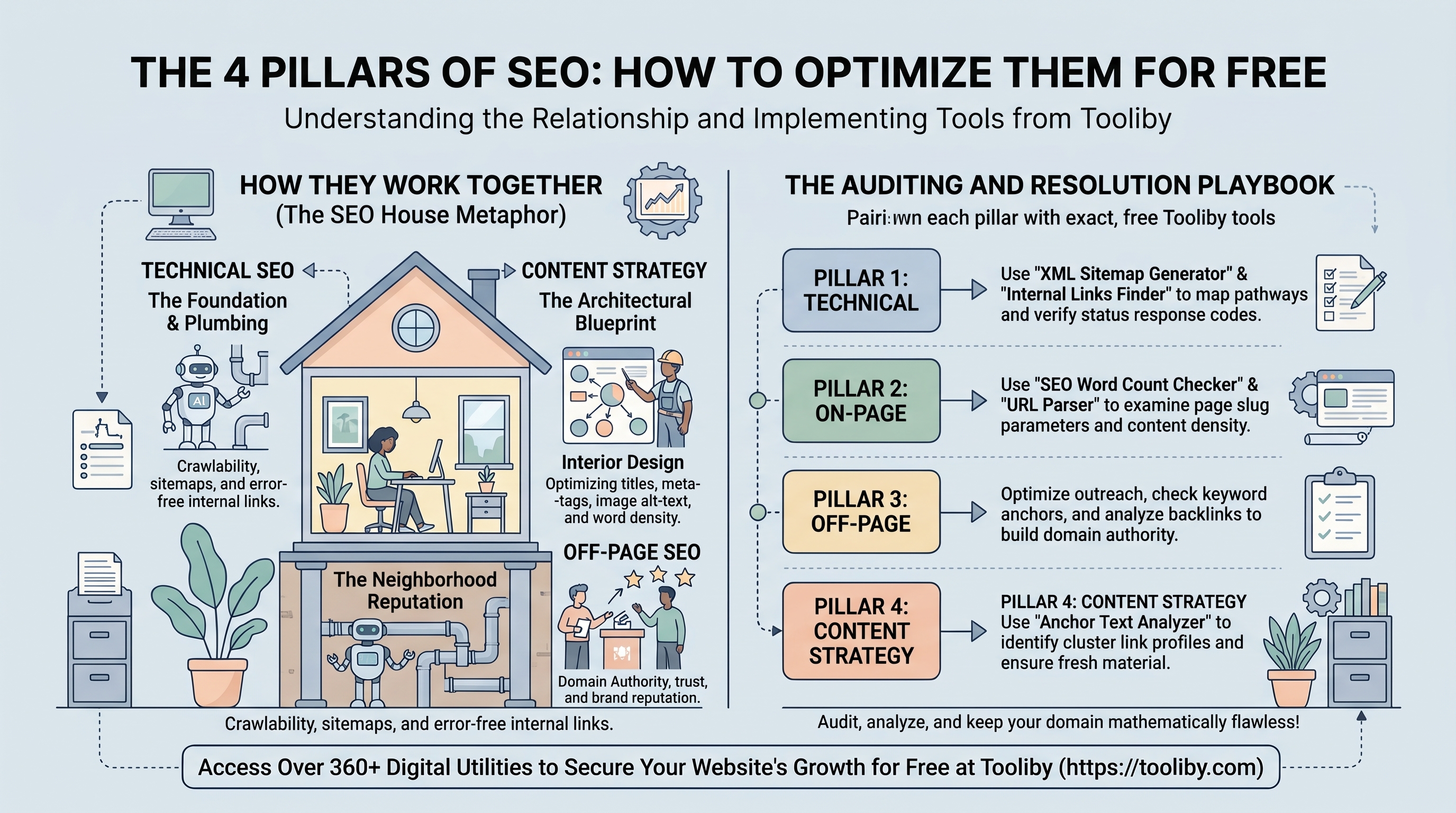
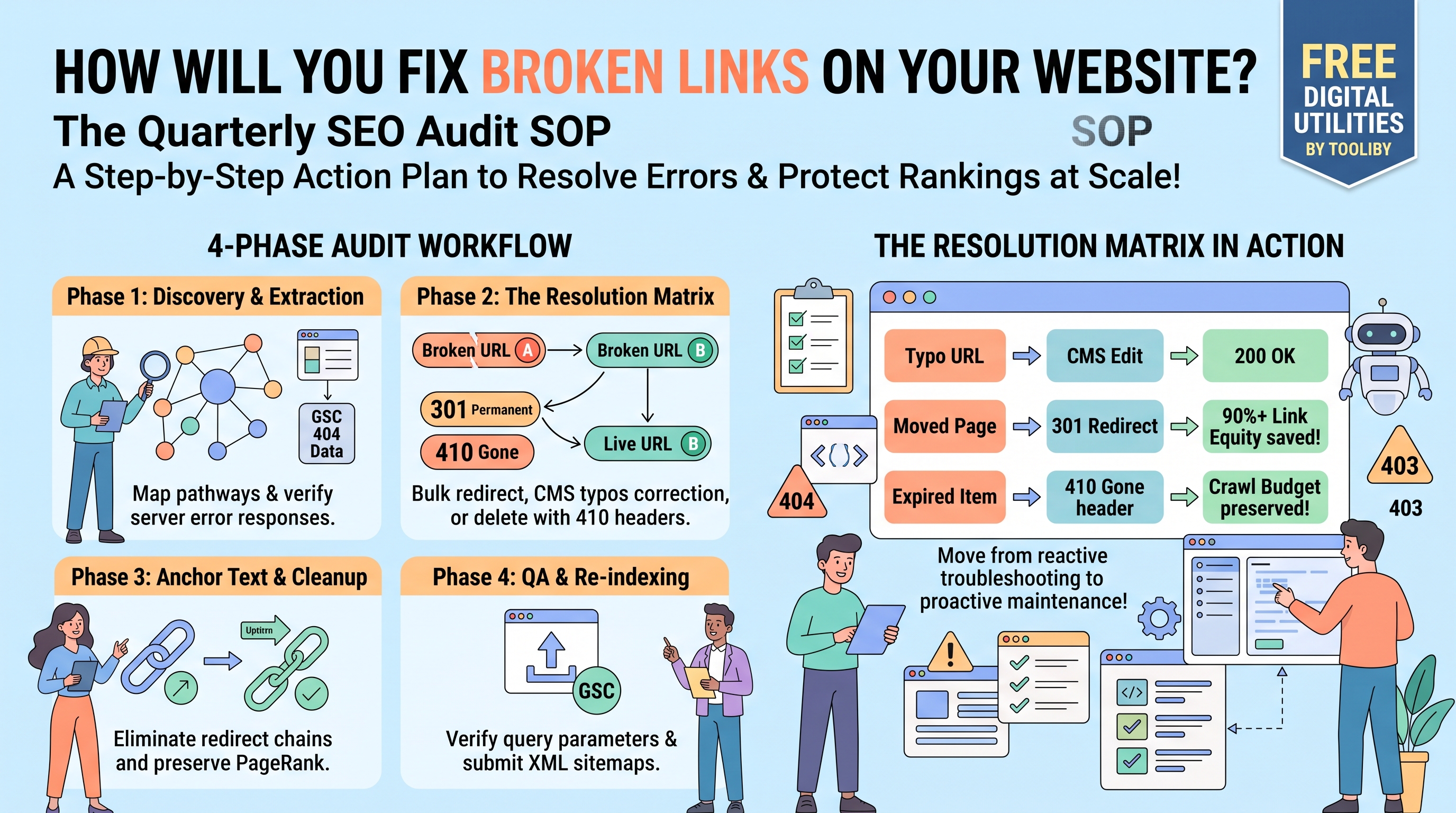
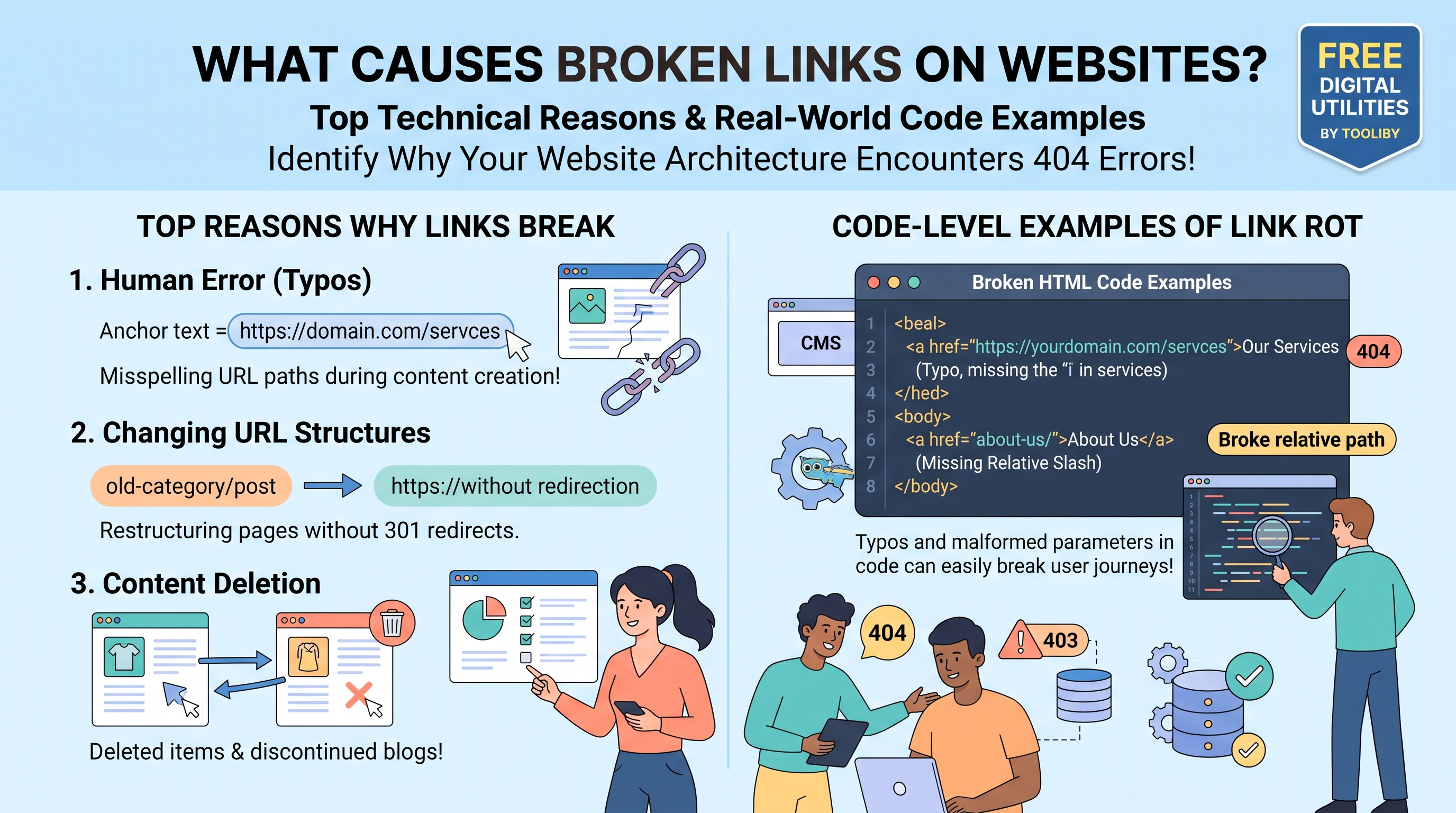
Link Hygiene: Fix dead ends and structure your site around the
4 Pillars of SEO
How to Prioritize SEO Tasks Using This Framework
The next time you plan a content calendar or develop a new tool for your website, run it through the 40-40-20 effort allocation filter:
The Audience Check (40%): Am I targeting ultra-low competition keywords that real people are searching for? Do I have the data to prove this search intent?
The Offer Check (40%): Does my blog or free digital utility solve their exact problem faster, better, and more thoroughly than the current top-ranking competitor?
The Execution Check (20%): Is my page loading instantly, free of technical errors, and formatted with clean subheadings and appealing graphics?
By keeping your priorities strictly aligned with this framework, you will stop wasting time on minor, low-impact tweaks and start focusing on the core strategies that drive sustainable, high-converting organic traffic.
Frequently Asked Questions (FAQs)
1. Who created the 40-40-20 marketing rule?
The rule was coined in the 1960s by Ed Mayer, a renowned direct-mail marketing expert, who discovered that success depended 40% on the mailing list (audience), 40% on the offer, and 20% on the creative design.
2. How does the 40-40-20 rule compare to the 80/20 Pareto Principle in SEO?
While the
3. Is technical SEO really only 20% of the battle?
Yes and no. Once your website’s technical baseline (speed, indexing, mobile-friendliness) is functioning properly, obsessing over minor code tweaks yields diminishing returns. At that point, 80% of your ongoing effort should be entirely focused on audience targeting and content creation.
What Is Tooliby Blog?
Tooliby Blog is a free publication covering developer tools, SEO, AI prompts and productivity — written by real practitioners who use these tools daily. No paywall, no account needed. Just practical content you can act on.
Can I share this article?
Yes — use the share buttons above to post on Twitter, LinkedIn, Facebook or WhatsApp. The more people read it, the better.
How do I write for Tooliby?
Click Write for Us and submit your article. We review within 48 hours and publish with full author credit and bio.