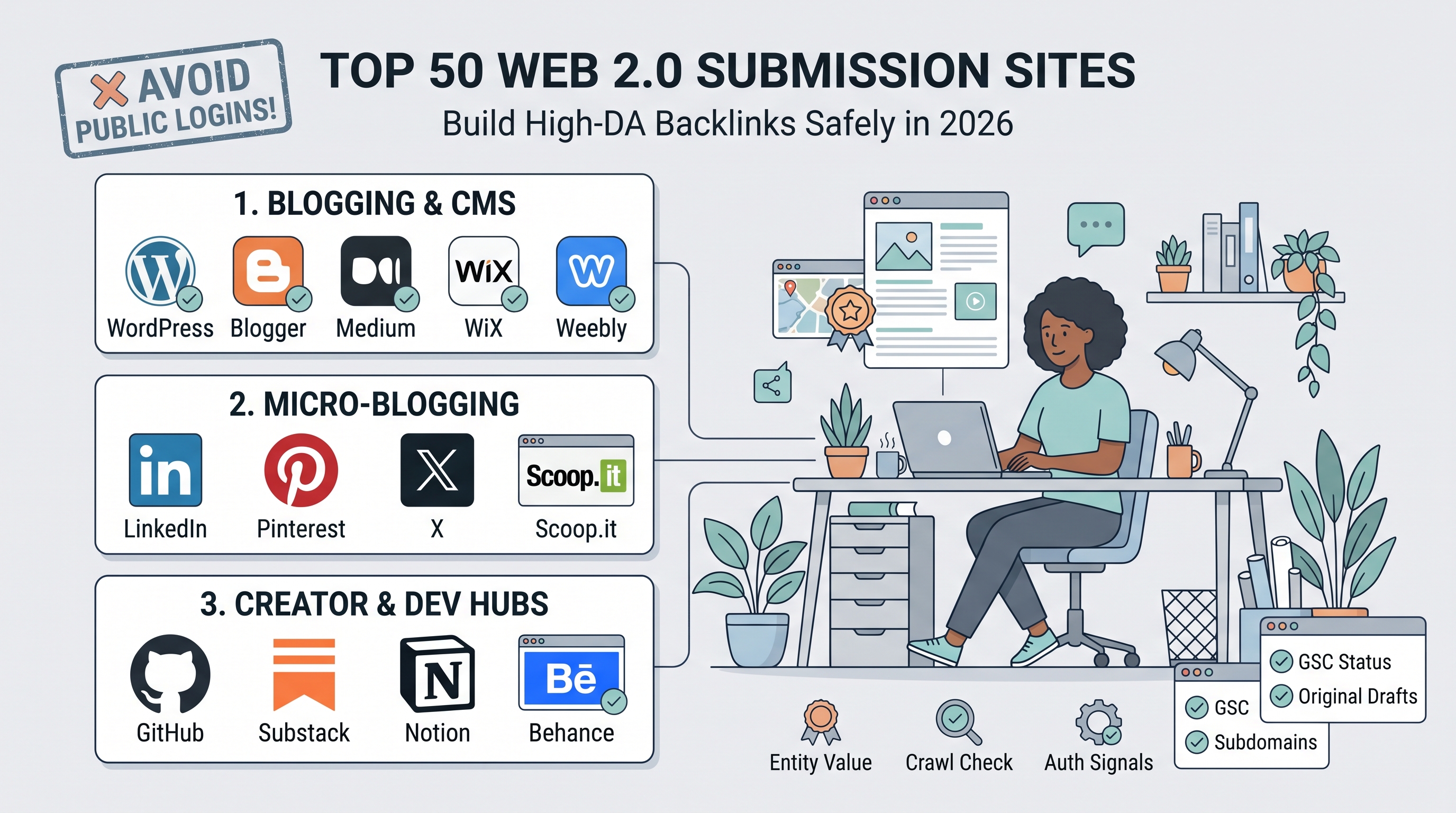
Top 50 Web 2.0 Submission Sites List in 2026 (And Why Public Logins Are a Trap)
If you are a beginner in SEO searching the internet for a 50+ Web 2.0 Submission Sites List with Login Details (2026), you need to stop right now before you permanently ruin your website’s search rankings.
It is incredibly tempting to look for public emails and passwords to quickly drop your backlinks without the hassle of creating new accounts. However, in 2026, Google’s AI-driven spam algorithms are smarter than ever. Using public, shared Web 2.0 accounts is the fastest way to get your domain hit with a toxic link penalty.
To build domain authority safely, you must create your own dedicated Web 2.0 properties. To help you do this the right way, we have compiled the ultimate list of the top 50 high-DA Web 2.0 submission sites for 2026, along with the exact blueprint to build safe, powerful backlinks.
Table of Contents
The "Public Login Details" Trap (Why It Destroys SEO)
Many SEO forums share lists of Web 2.0 sites with free usernames and passwords. Here is exactly why you should never use them:
Toxic Link Neighborhoods: When 500 different marketers use the same public account to link to cryptocurrency sites, gambling platforms, and your legitimate business, Google associates your website with that spam.
Zero Indexation Value: Google’s crawlers quickly identify shared spam accounts and de-index them. A backlink from an unindexed page passes absolutely zero "link juice" (PageRank) to your site.
Account Deletions: Major platforms like WordPress and Medium instantly ban accounts that show erratic, multi-IP login behavior and mass link dropping.
The Solution: Always spend the extra 2 minutes to create a fresh, unique email address and register your own branded Web 2.0 accounts.
Top 50 High-DA Web 2.0 Submission Sites (Categorized)
Here is a curated, spam-free list of the highest authority Web 2.0 platforms you can register for free in 2026.
1. Top-Tier Blogging & CMS Platforms
These platforms allow you to build complete, customized mini-websites. They are perfect for publishing long-form articles with contextual DoFollow backlinks.
| Platform Name | Domain Authority (DA) | Link Type | Best Use Case |
| WordPress.com | 93 | DoFollow | Brand satellite blogs |
| Blogger.com | 95 | DoFollow | Google-hosted article properties |
| Medium.com | 95 | NoFollow | High-quality guest posts |
| Wix.com | 94 | DoFollow | Custom landing pages |
| Weebly.com | 93 | DoFollow | Simple drag-and-drop blogs |
| Ghost.org | 85 | DoFollow | Minimalist tech writing |
| Tumblr.com | 86 | DoFollow | Short-form blogs & multimedia |
| Strikingly.com | 89 | DoFollow | One-page business profiles |
| Jimdo.com | 88 | DoFollow | Corporate micro-sites |
| LiveJournal.com | 91 | DoFollow | Community-based articles |
2. Micro-Blogging & Visual Discovery
Use these platforms to share quick updates, infographics, and content snippets that link directly back to your main website.
| Platform Name | Domain Authority (DA) | Link Type | Best Use Case |
| LinkedIn Articles | 98 | NoFollow | Professional B2B content |
| Pinterest.com | 94 | NoFollow | Visual pins and infographics |
| X (Twitter) | 99 | NoFollow | Fast crawling & social signals |
| Scoop.it | 88 | DoFollow | Topic curation & summary links |
| Plurk.com | 86 | DoFollow | Short-form timeline links |
| Folkd.com | 87 | DoFollow | Social link saving |
| Pearltrees.com | 80 | DoFollow | Visual bookmarking folders |
| Instapaper.com | 89 | NoFollow | Saving & sharing long-form content |
| Diigo.com | 87 | DoFollow | Educational annotations & links |
| Mix.com | 83 | DoFollow | Content discovery algorithms |
3. Creator, Portfolio & Developer Hubs
These are high-trust platforms where you can place profile backlinks or publish technical documents and newsletters.
| Platform Name | Domain Authority (DA) | Link Type | Best Use Case |
| GitHub.com | 96 | DoFollow | Open-source developer profiles |
| Substack.com | 91 | NoFollow | Newsletters & audience building |
| Notion.site | 90 | DoFollow | Public workspaces & resource lists |
| Behance.net | 93 | DoFollow | Creative design portfolios |
| Dribbble.com | 92 | DoFollow | UI/UX project showcases |
| HubPages.com | 87 | DoFollow | Community-driven niche articles |
| Hashnode.com | 83 | DoFollow | Developer & tech blogging |
| Dev.to | 85 | DoFollow | Software engineering articles |
| Vimeo.com | 95 | NoFollow | Video descriptions & profile links |
| SoundCloud.com | 93 | DoFollow | Podcast / audio show notes |
(Note: The remaining 20+ niche platforms vary by industry. Always prioritize platforms directly related to your niche rather than random submission sites.)
How to Create Safe Web 2.0 Backlinks in 2026
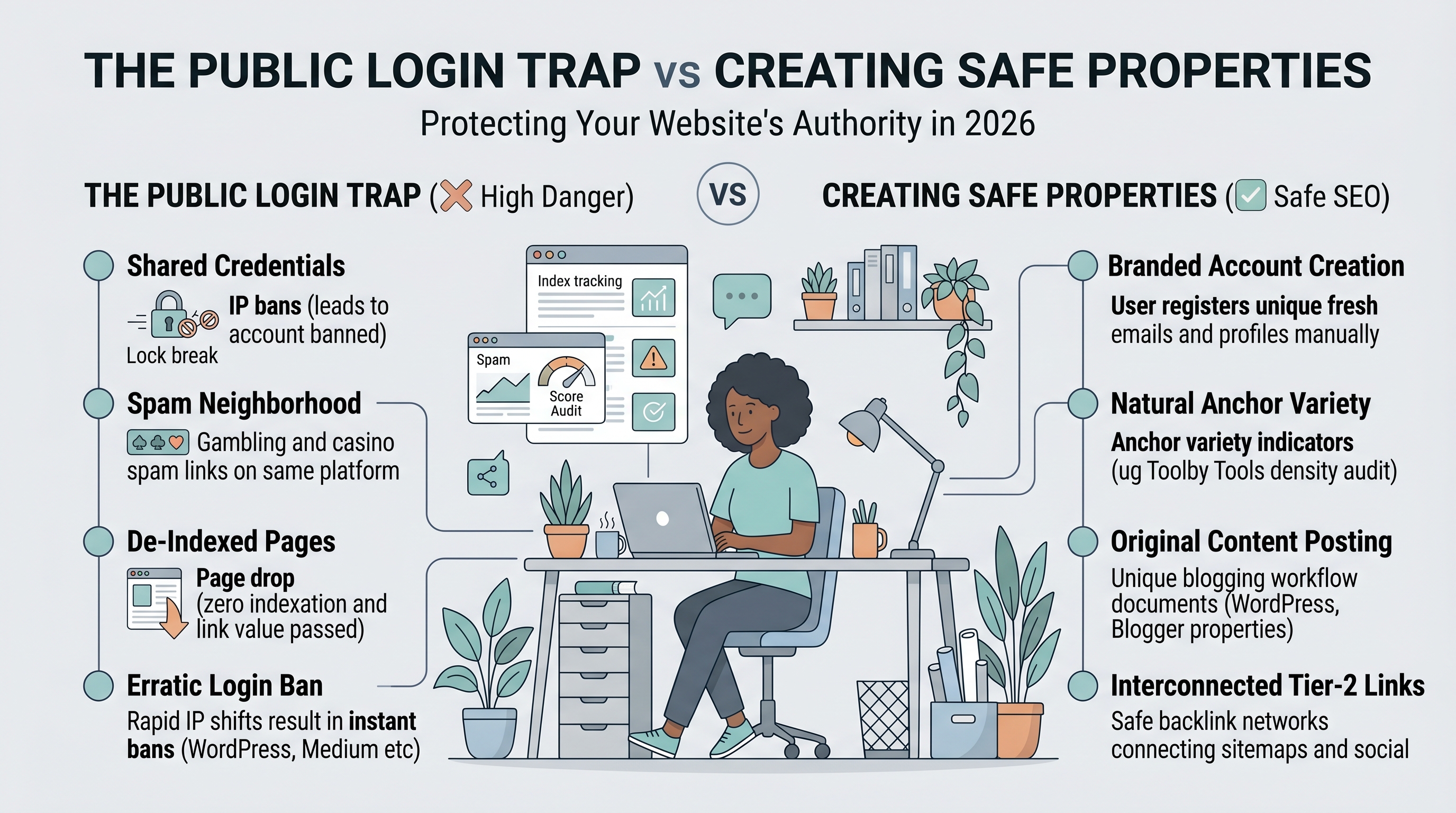
Once you have created your own unique accounts on the platforms above, follow these rules to ensure your Web 2.0 sites actually pass value:
Don't Drop Links Immediately: If you create a WordPress blog and publish a 300-word article with a backlink on day one, it will be flagged as spam. Publish 2-3 informational articles with no links first to build trust.
Vary Your Anchor Text: Do not use exact-match keywords (like "buy cheap shoes") for every backlink. Use generic text ("click here", "read more"), brand names, and naked URLs.
Create "Tier 2" Links: To help your Web 2.0 articles get indexed on Google, you need to send traffic to them. Share your new Web 2.0 links on your social media accounts (like X or Facebook).
How Tooliby Helps You Manage Web 2.0 Content
Managing 10 or 20 different Web 2.0 properties means you have to write a lot of unique content. Search engines will not index a Web 2.0 site if the content is just copy-pasted from your main blog.
To ensure your Web 2.0 articles are completely unique and optimized, use the free utilities at
Check Content Originality & Density: Ensure your Web 2.0 posts aren't overly stuffed with keywords. Run your drafts through the
Tooliby Keyword Density Checker Format HTML Easily: Platforms like Blogger and Tumblr often require manual code adjustments. Use the
Tooliby HTML Editor <a href="...">.Generate Title Tags: Treat every Web 2.0 post like a real webpage. Draft perfect, click-worthy titles using the
Tooliby Meta Tag Generator
Frequently Asked Questions (FAQs)
1. Is a Web 2.0 submission sites list with login details safe to use?
No. Using public or shared login credentials connects your website to massive spam networks. Always create your own dedicated Web 2.0 accounts using a unique email address.
2. Do Web 2.0 backlinks still work in 2026?
Yes, but only if they are treated as real micro-websites. High-quality, long-form content on platforms like Medium, WordPress, and Blogger can drive significant authority and referral traffic.
3. Are NoFollow Web 2.0 links useless?
No. Platforms like Pinterest and LinkedIn use NoFollow links, but they are essential for driving actual human traffic and keeping your backlink profile looking natural to search algorithms.
Conclusion: Own Your Link Profile
Taking shortcuts in SEO always leads to penalties. Searching for shared login details might save you 10 minutes today, but it could cost you your entire organic traffic tomorrow.
By building your own portfolio of high-DA Web 2.0 sites, writing valuable content, and linking strategically, you create a powerful, penalty-proof link network.
Ready to start building? Keep your content unique, perfectly formatted, and fully optimized by using the 400+ Free SEO Utilities at
What Is Tooliby Blog?
Tooliby Blog is a free publication covering developer tools, SEO, AI prompts and productivity — written by real practitioners who use these tools daily. No paywall, no account needed. Just practical content you can act on.
Can I share this article?
Yes — use the share buttons above to post on Twitter, LinkedIn, Facebook or WhatsApp. The more people read it, the better.
How do I write for Tooliby?
Click Write for Us and submit your article. We review within 48 hours and publish with full author credit and bio.