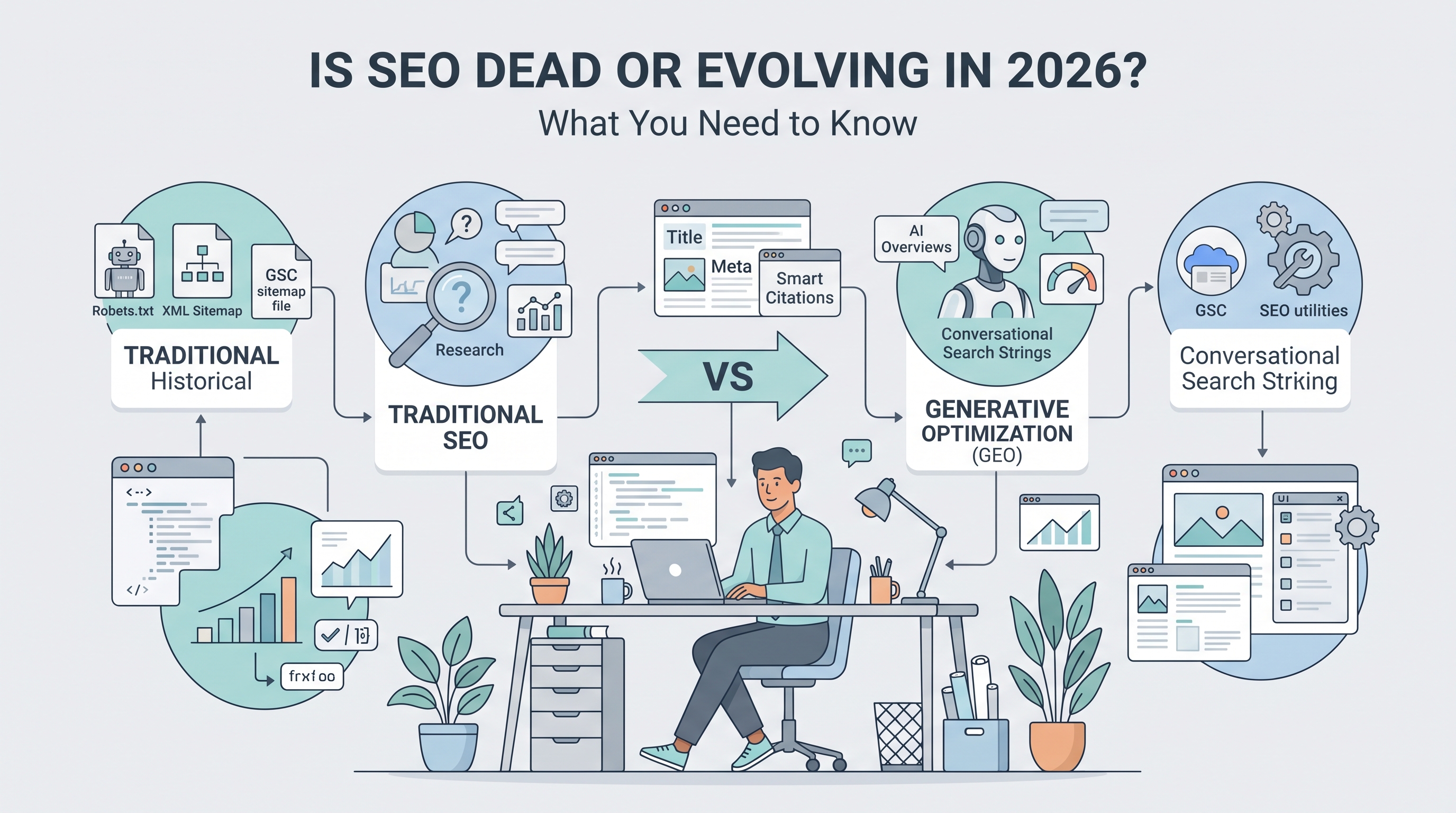
Is SEO Dead or Evolving in 2026? What You Need to Know
Since the explosion of AI-powered chatbots and Google’s AI Overviews, panic has spread across the digital marketing world. Bloggers, business owners, and developers are all asking the same terrifying question: Is SEO dead or evolving in 2026?
If you look at traditional, old-school search optimization—where marketers just stuffed keywords into repetitive, low-value articles to trick the algorithm—then yes, that version of SEO is dead.
However, Search Engine Optimization itself is far from gone; it is experiencing its biggest evolution in history. Welcome to the era of GEO (Generative Engine Optimization). Here is exactly what you need to know to survive and thrive in this new landscape.
Table of Contents
Is SEO Being Phased Out by AI?
It is easy to assume that because AI can generate direct answers, nobody will click on websites anymore. But is SEO being phased out entirely? No.
Artificial Intelligence models are not magic; they are data aggregators. They cannot create new facts, breaking news, or personal human experiences out of thin air. AI relies on high-quality, original websites to pull its information from. If websites stop publishing optimized content, AI engines will literally run out of data to train on.
Google and other platforms know this, which is why their AI interfaces now actively include source citations and links to websites. If you optimize your content to be the source that AI trusts, you will still get massive traffic.
What Will SEO Look Like in 2026? (The Rise of GEO)
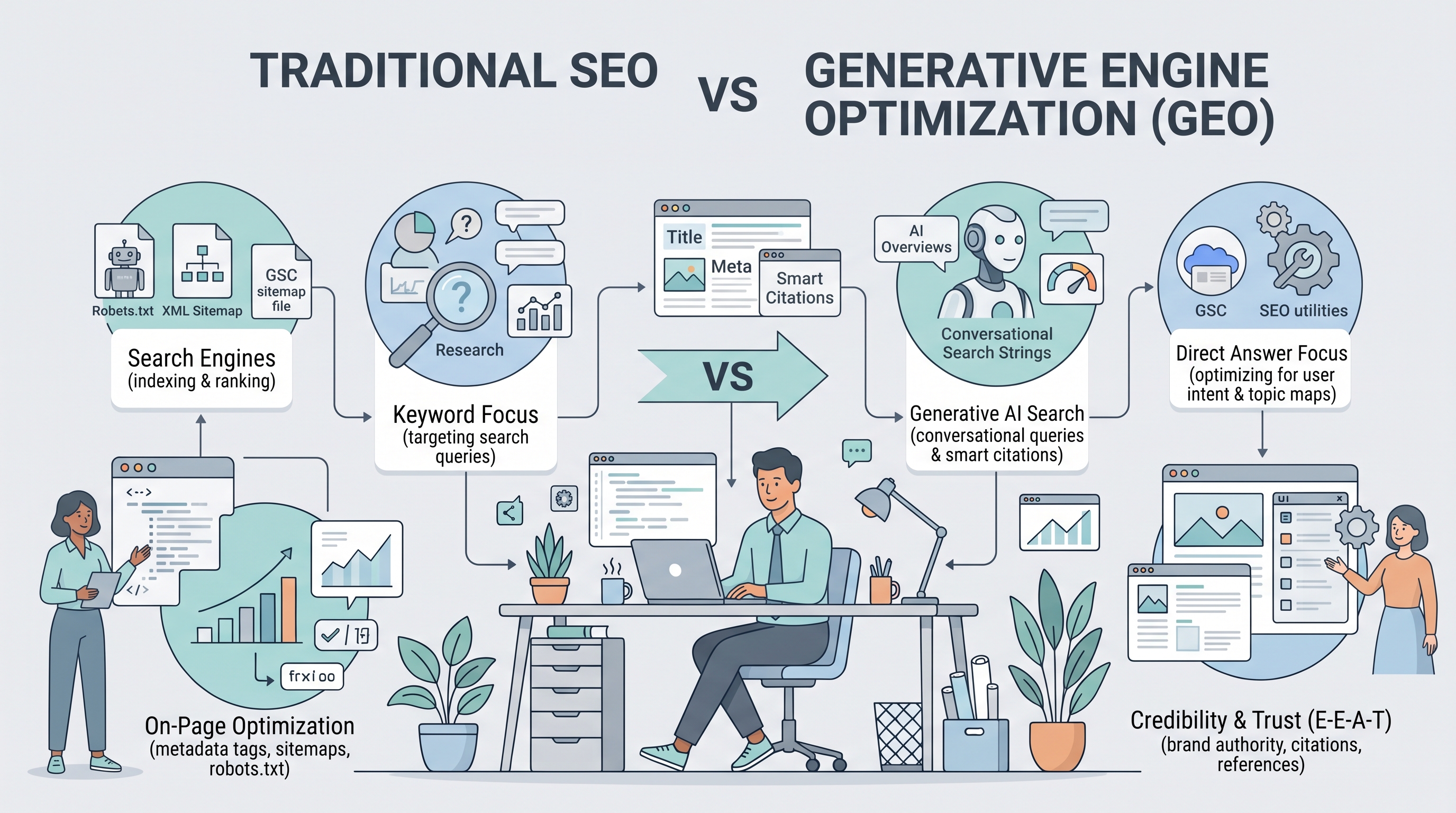
If you are wondering, what will SEO look like in 2026?, the answer lies in a new term: Generative Engine Optimization (GEO).
In the past, you would optimize for exact-match keywords (e.g., "buy cheap shoes NewYork"). Today, users are typing conversational, complex questions into AI tools (e.g., "What are the best affordable running shoes for flat feet in NYC right now?").
Here is how the strategy is changing:
From Keywords to Context: Instead of repeating a keyword 10 times, you must cover the entire topic comprehensively.
Information Gain: AI rewards articles that offer new data, original research, or unique opinions that do not already exist in the system.
E-E-A-T is King: Experience, Expertise, Authoritativeness, and Trustworthiness are non-negotiable. AI wants to cite real experts, not anonymous bloggers.
Is There a Future for SEO?
Yes, there is a massive future for SEO. But the skills required to succeed have shifted.
Because AI bots need to quickly digest and summarize your website, your Technical SEO matters more than ever before. AI crawlers are extremely efficient, but they are also lazy. If your website is poorly coded, takes too long to load, or lacks clear structure, the AI will simply skip your page and pull information from a competitor with a cleaner website.
To secure your future rankings, you must ensure that your website's backend is flawless.
How to Adapt Your Website for AI Bots (Free Technical Solutions)
In 2026, manual coding for technical SEO is outdated. You must use modern utilities to keep your site's architecture perfectly clean for AI crawlers.
Instead of paying expensive agencies to fix your technical errors, you can manage your site's health yourself using automated systems:
Crawlability: You need a perfect roadmap for AI bots. Use the
Tooliby XML Sitemap Generator Access Control: Tell AI exactly where to look (and where not to look) by generating a clean crawler file with the
Tooliby Robots.txt Generator Code Speed: Fast-loading sites are cited more often by AI overviews. Remove heavy backend clutter instantly by running your site's code through a free
HTML Minifier
By utilizing these free online developer tools, you can ensure your website is perfectly prepped for Generative Engine Optimization.
Frequently Asked Questions (FAQs)
1. Is SEO dead or evolving in 2026?
SEO is strictly evolving. The focus is shifting away from traditional keyword stuffing toward Generative Engine Optimization (GEO), where websites act as highly authoritative data sources for AI tools.
2. Is SEO being phased out for small businesses?
No. Local and small businesses are highly favored by search engines. AI prioritizes real, authentic local entities over generic, faceless corporate blogs.
3. Will ChatGPT replace Google search?
While AI chatbots are taking a share of informational searches, people still prefer traditional search engines for transactional queries (buying things) and navigational searches (finding specific websites). Both will coexist.
Conclusion: Evolve or Fall Behind
SEO is not dead in 2026; it has simply matured. The websites that will die are those refusing to adapt, still relying on cheap, mass-produced content and spammy tactics.
If you focus on providing genuine human value, building brand authority, and maintaining a flawless technical backend, your search traffic will continue to grow in the AI era.
Don't let technical errors block AI from finding your site! Ensure your technical foundation is rock solid by using our
What Is Tooliby Blog?
Tooliby Blog is a free publication covering developer tools, SEO, AI prompts and productivity — written by real practitioners who use these tools daily. No paywall, no account needed. Just practical content you can act on.
Can I share this article?
Yes — use the share buttons above to post on Twitter, LinkedIn, Facebook or WhatsApp. The more people read it, the better.
How do I write for Tooliby?
Click Write for Us and submit your article. We review within 48 hours and publish with full author credit and bio.