How to Get SEO Backlinks in 2026 (Using the 80/20 & 70/20/10 Rules)
If you have spent any time trying to grow a website, you know that acquiring backlinks is the hardest part of SEO. Many beginners eventually ask: Is SEO dead now with AI? Do backlinks still matter in 2026?
The answer is simple: AI has made content creation easy, which means backlinks are now the only true currency of trust on the internet. But how do you actually get them without burning out?
Instead of blindly emailing hundreds of website owners or risking your domain by buying toxic links, smart marketers use mathematical frameworks. In this guide, we will show you how to find and get SEO backlinks using famous marketing strategies like the 80/20 Rule and the 70/20/10 Rule, and whether paying for links is ever worth the risk.
Table of Contents
How to Find and Get Backlinks for SEO
Before applying advanced marketing rules, you need to understand the core mechanics of getting backlinks. There are fundamentally three ways to get a link in 2026:
Build Them: Manually creating profiles on high-DA Web 2.0 sites, directories, and social media.
Earn Them: Creating incredible "linkable assets" (like free tools, infographics, or original data) that people naturally link to.
Ask for Them: Reaching out to other bloggers and asking for a link insertion or offering a guest post.
To find where your competitors are getting backlinks, you can simply type their URL into free backlink checker tools. If they got a link from a specific directory, you can likely get one there too.
Are Paid Backlinks Worth It? (And How Much Do They Cost?)
When outreach gets exhausting, many website owners ask: Is it worth paying for backlinks? How much do backlinks cost?
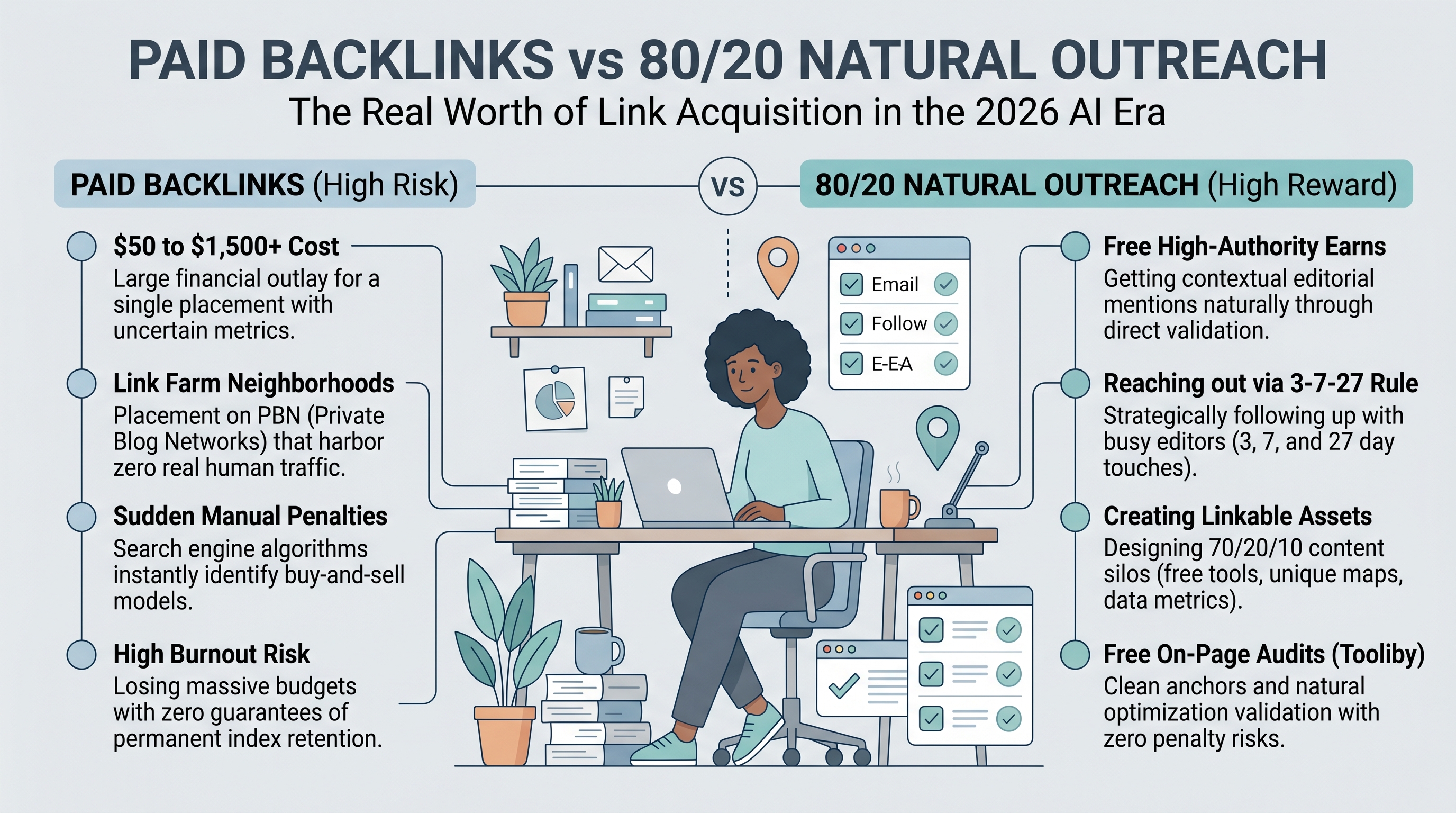
Depending on the quality, paid backlinks can cost anywhere from $50 to $1,500+ per link. However, paying for links is a direct violation of Google’s Spam Guidelines.
Are they worth it? No. Search engine algorithms in 2026 are incredibly efficient at detecting paid "link farms" and Private Blog Networks (PBNs). A sudden influx of purchased links can result in a manual penalty, permanently dropping your website from search results. Focus on earning free, natural links instead.
The 80/20 Rule in SEO (The Pareto Principle)
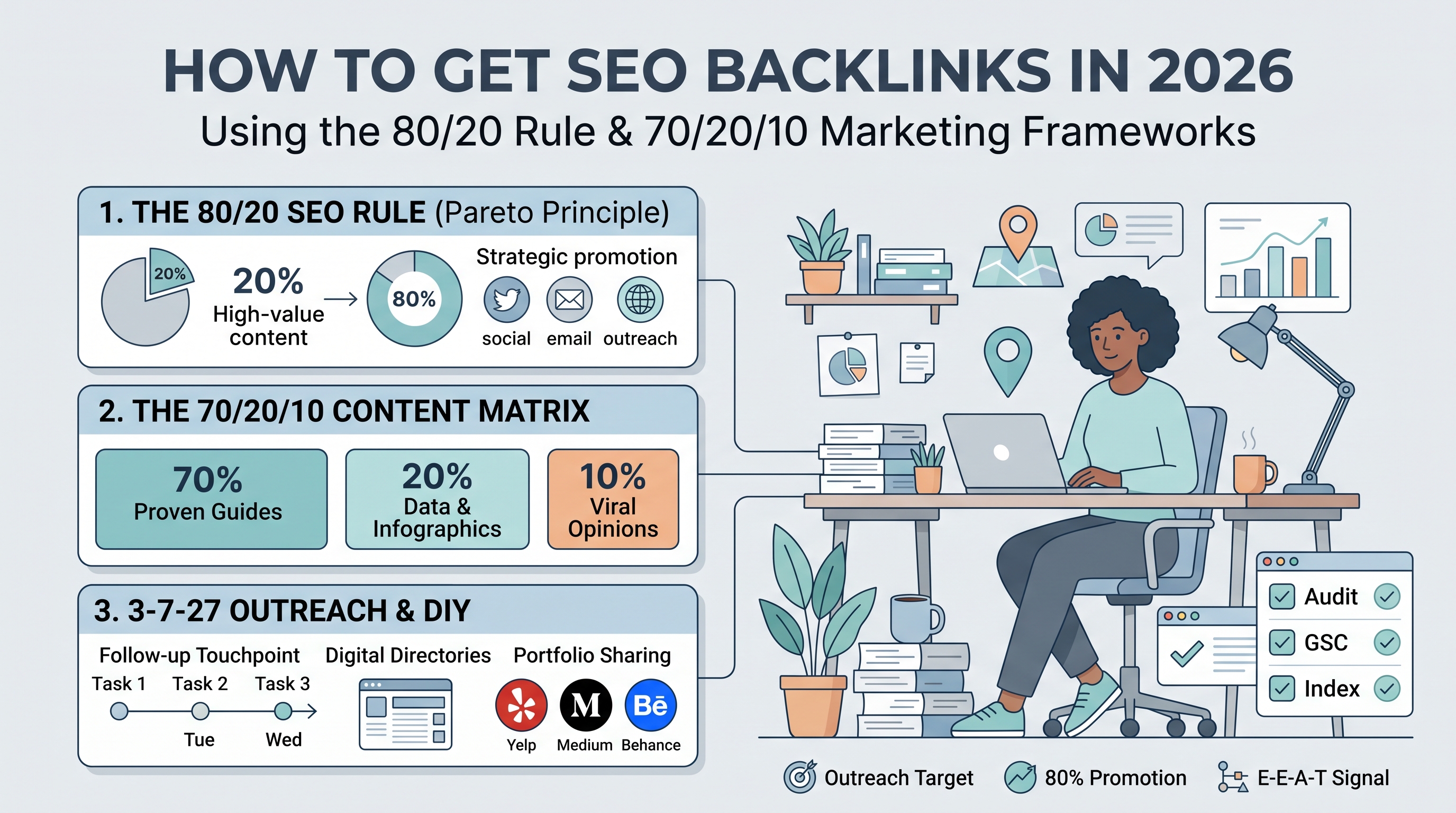
What is the 80/20 rule in SEO? Also known as the Pareto Principle, this rule states that 80% of your results come from 20% of your efforts. In SEO link-building, this applies in two major ways:
The Content vs. Promotion Split: Most beginners spend 80% of their time writing content and 20% promoting it. Flip this. Spend 20% of your time creating an amazing piece of content, and 80% of your time promoting it on social media, pitching it to newsletters, and doing outreach to earn backlinks.
Link Equity: 80% of your website’s ranking power will come from the top 20% of your highest-quality backlinks. Stop chasing 100 low-quality forum links; focus your energy on getting 20 high-authority links.
The 70/20/10 Rule for Linkable Content
If you want to earn natural backlinks, you need content that people want to link to. What is the 70/20/10 rule in marketing? It is a budget and resource allocation strategy that works perfectly for SEO:
70% Proven Content: Dedicate 70% of your blog to answering safe, high-volume questions (like "How to do keyword research"). This builds your foundation.
20% Data & Infographics: Dedicate 20% of your effort to creating unique infographics, industry surveys, and visual data. This is what attracts high-DA editorial backlinks.
10% High-Risk / Opinion: Spend 10% of your time on bold, controversial opinion pieces (e.g., "Why AI Will Destroy Traditional Marketing"). These pieces often go viral and generate massive spontaneous backlinks.
The 3-7-27 & 1% Rules in Outreach
If you are emailing other website owners asking for backlinks, you need to understand these two outreach formulas:
What is the 3-7-27 rule? In marketing, this means it takes multiple touchpoints to close a deal (contacting someone 3 days later, then 7 days, then 27 days). For SEO outreach, it means always follow up. A busy editor won't reply to your first email, but a polite follow-up on day 7 might secure the backlink.
What is the 1% rule? In internet culture, 90% of people consume content, 9% interact with it, and only 1% create it. When you reach out for backlinks, expect a 1% to 3% conversion rate. If you want 10 backlinks, you need to pitch 1,000 highly targeted prospects.
Where Can I Get Free Backlinks Today?
If you are just starting out, you can immediately build safe, free foundational links without outreach:
Niche Directories: Submit your site to industry-specific directories (not general spam directories).
Visual Portfolios: Share your custom blog graphics on Pinterest, Flickr, and Behance.
Document Sharing: Convert your blogs into PDFs and upload them to SlideShare and Issuu with a backlink in the description.
Streamline Your SEO Strategy with Tooliby
Executing the 80/20 rule means you need to save time on technical tasks so you can focus on promotion. You can automate your on-page checks for free using the
Audit Your Linkable Assets: Before promoting your 70/20/10 content, ensure your text isn't over-optimized. Run it through the
Tooliby Keyword Density Checker Format Outreach Links: When sending your URLs in outreach emails or submitting to directories, ensure they are perfectly formatted using the
Tooliby URL Encoder/Decoder Perfect Your Meta Tags: Make your content irresistible to click when shared on social media by generating perfect titles with the
Tooliby Meta Tag Generator
Frequently Asked Questions (FAQs)
1. Is SEO dead now with AI?
No. AI models actually rely on traditional search indexes to find facts. Backlinks are the trust signals that tell AI algorithms which websites to cite as reliable sources.
2. Are backlinks still relevant in 2026?
Yes. Google’s algorithms have evolved, but high-quality backlinks remain one of the top three ranking factors. They separate trusted human brands from mass-produced AI spam.
3. How to find backlinks for SEO for my competitors?
You can use freemium SEO tools like Ahrefs Webmaster Tools, Ubersuggest, or Moz Link Explorer to plug in your competitor's URL and see exactly where their backlinks are coming from.
Save time, apply the 80/20 rule, and start building high-quality links today. Optimize your campaigns for free using the 400+ online utilities at
What Is Tooliby Blog?
Tooliby Blog is a free publication covering developer tools, SEO, AI prompts and productivity — written by real practitioners who use these tools daily. No paywall, no account needed. Just practical content you can act on.
Can I share this article?
Yes — use the share buttons above to post on Twitter, LinkedIn, Facebook or WhatsApp. The more people read it, the better.
How do I write for Tooliby?
Click Write for Us and submit your article. We review within 48 hours and publish with full author credit and bio.