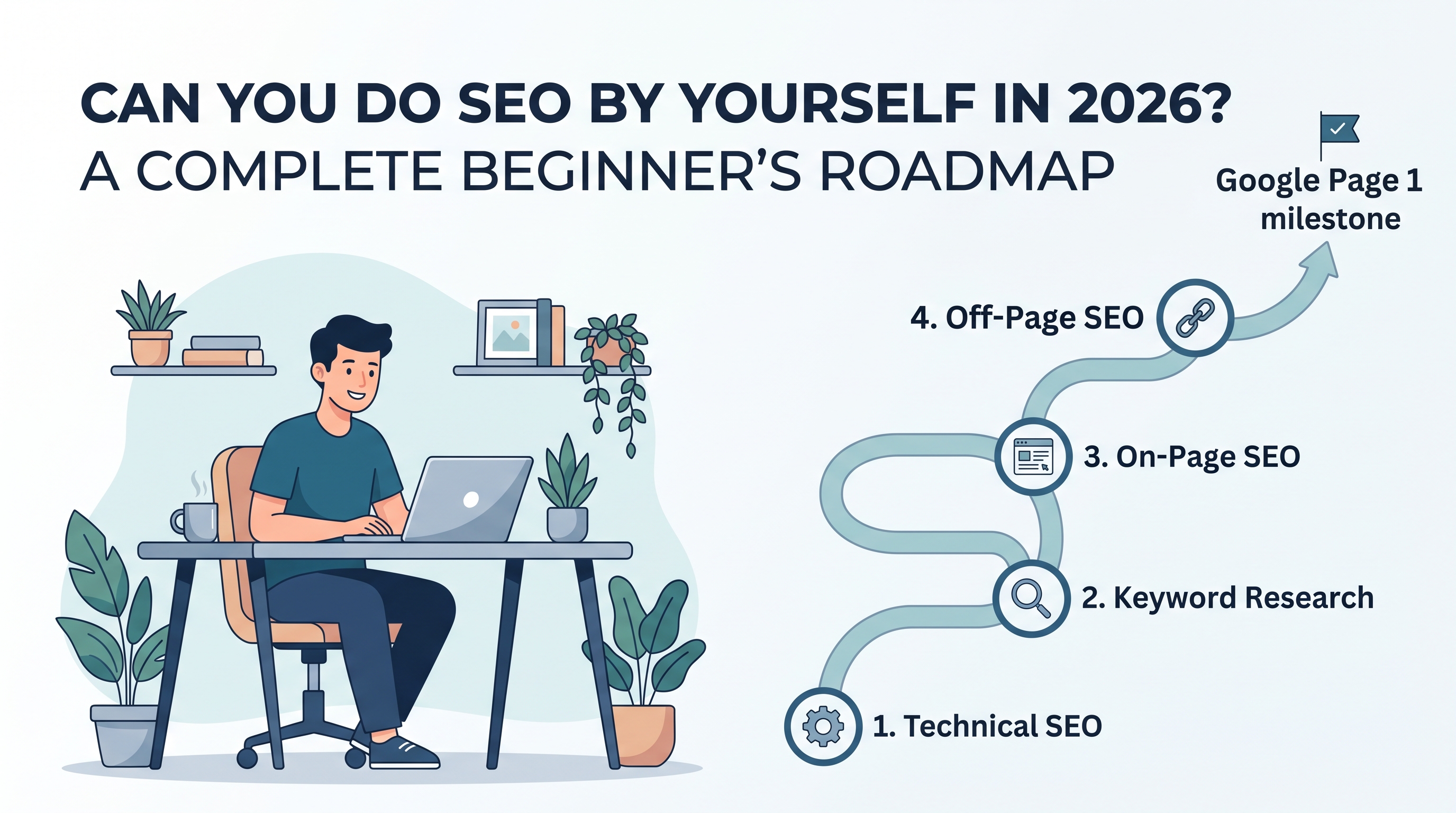
Can You Do SEO by Yourself in 2026? A Complete Beginner’s Roadmap
Are you launching a new tech blog or utility website and wondering, "Can I do SEO by myself in 2026?" With all the talk about AI algorithms, core updates, and expensive marketing agencies, many beginners feel completely overwhelmed before they even start.
The core answer: Yes, you absolutely can do SEO yourself. In fact, in 2026, DIY SEO (Do-It-Yourself SEO) is easier than ever because modern AI assistants and free online tools have leveled the playing field. You do not need to be a master programmer or a marketing genius; you just need a clear roadmap and consistency.
Here is your complete, step-by-step beginner’s roadmap to mastering search engine optimization without spending a dime on expensive agencies.
Table of Contents
Why DIY SEO is Easier in 2026
Five years ago, SEO required deep technical knowledge to analyze data, find broken links, and structure website code. Today, the landscape has entirely shifted.
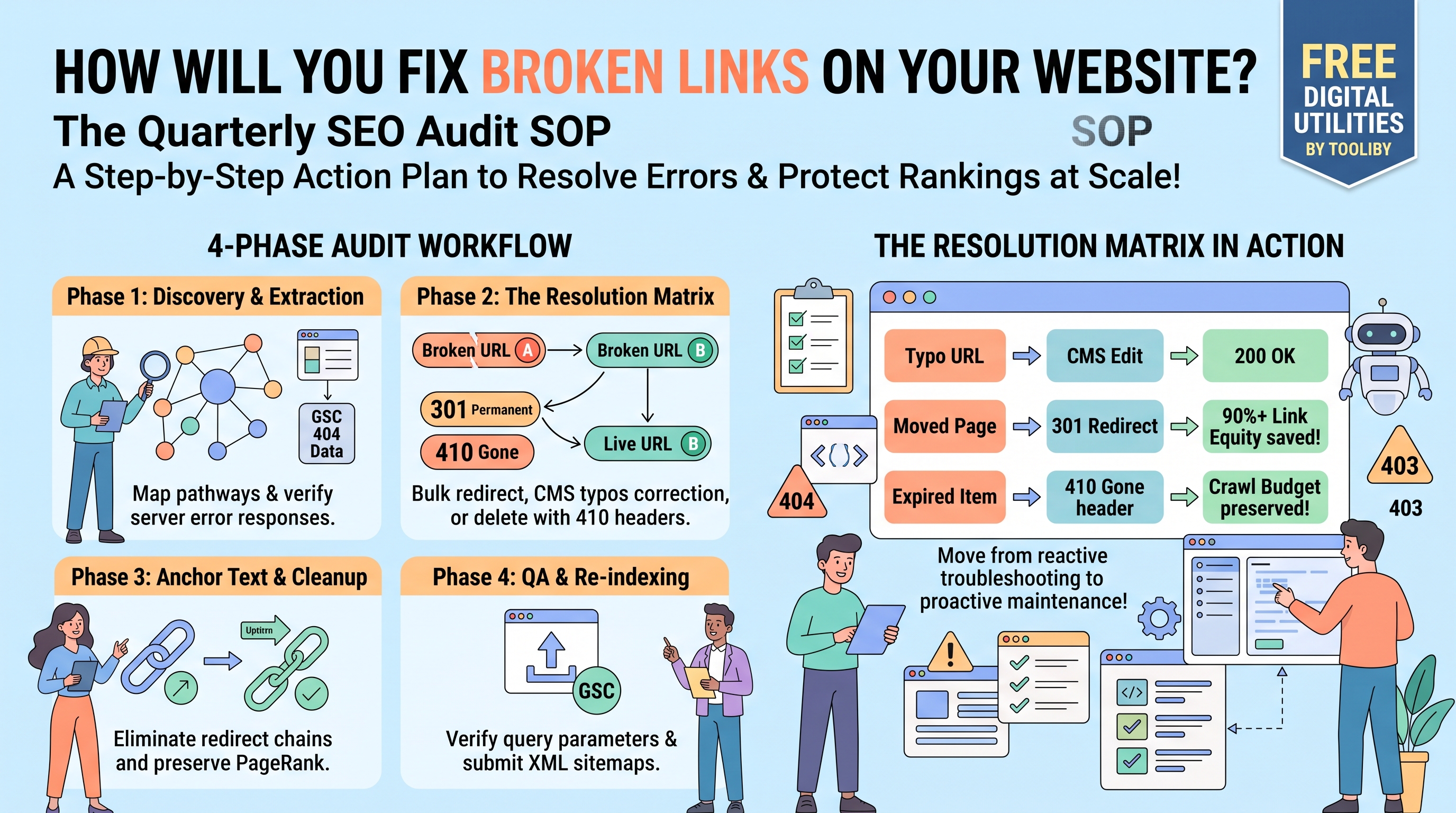
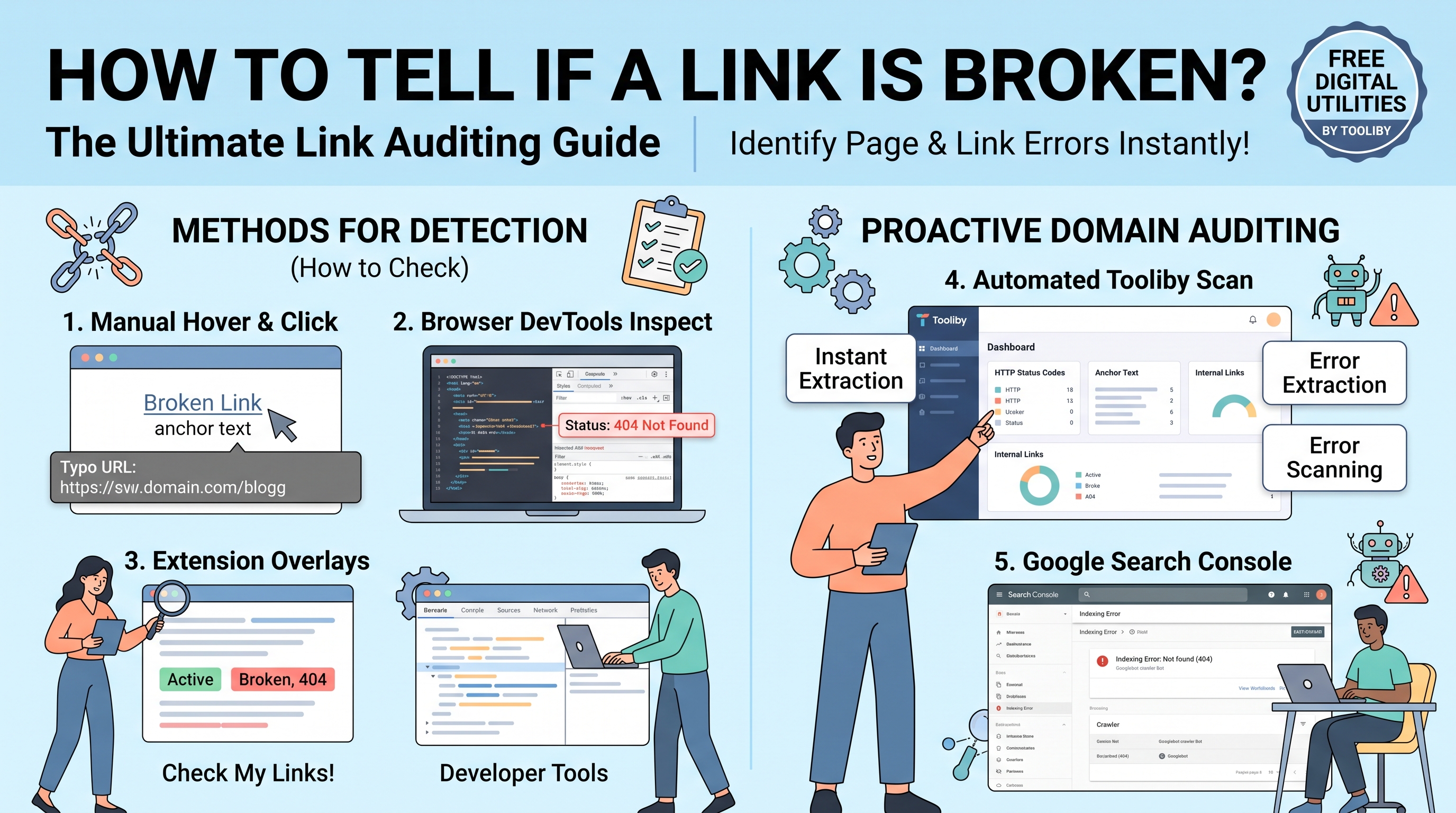
Automation: Free tools can now instantly audit your website and tell you exactly what is broken.
Content Focus: Google's modern algorithms care more about human experience and direct problem-solving than robotic keyword density.
AI Assistance: You can use AI to generate outlines, structure FAQs, and check your grammar in seconds.
If you have the patience to learn and apply basic principles, you can easily outrank bigger competitors who publish lazy, unoptimized content.
The 4 Pillars of Search Engine Optimization
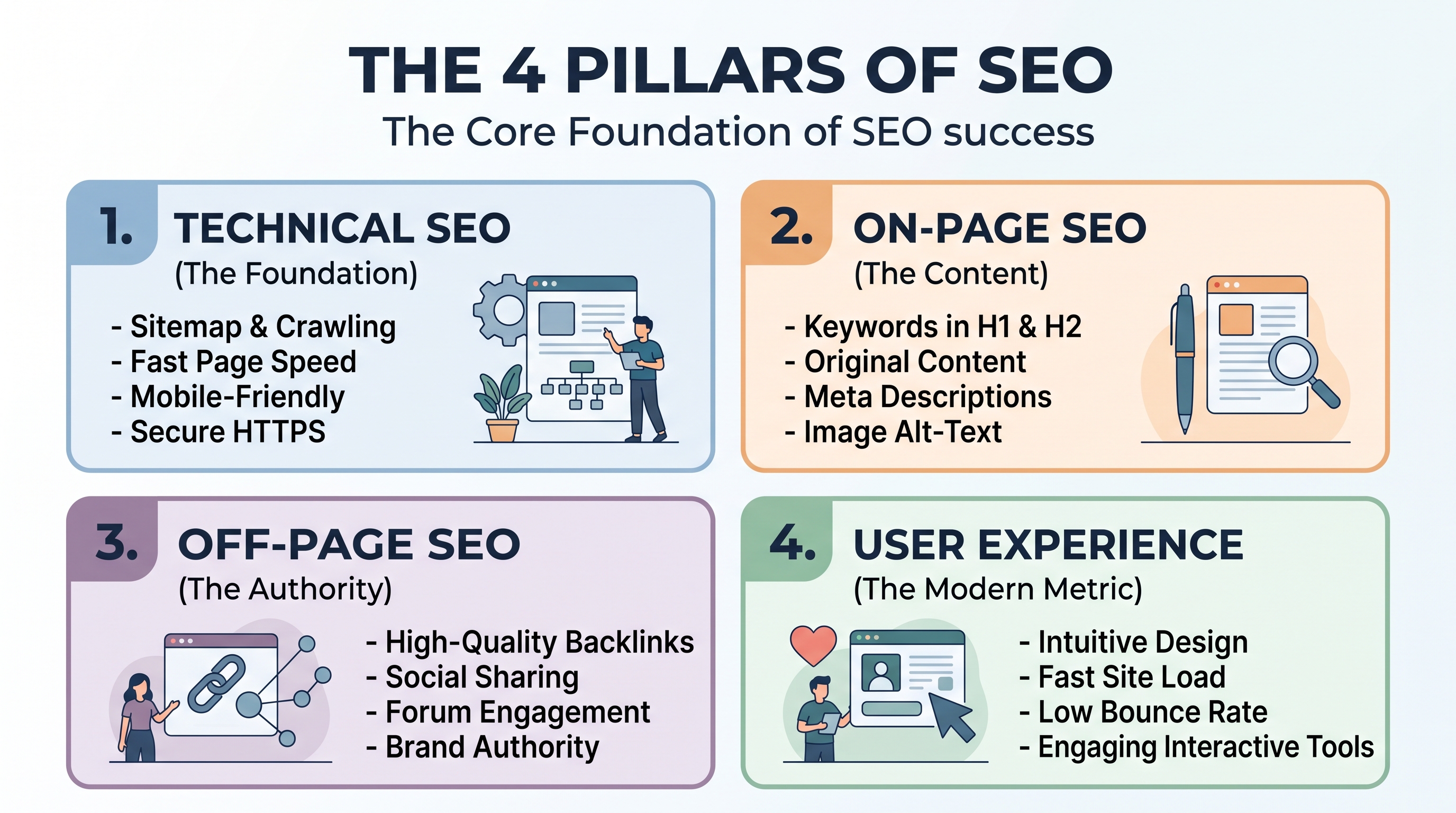
Before you start writing, you need to understand the four basic pillars of SEO. Think of these as the four tires of your car; if one is missing, you won't get far.
1. Technical SEO (The Foundation)
This is how well search engines can crawl and index your website. It includes having a fast page loading speed, a mobile-friendly design, and a clean XML sitemap. If Google cannot read your site, your content will never rank.
2. On-Page SEO (The Content)
This involves optimizing the elements on your actual web pages. It includes writing high-quality content, using your main keywords in H1 and H2 tags, optimizing images with alt-text, and writing catchy meta descriptions.
3. Off-Page SEO (The Authority)
Off-page SEO is about building your website's reputation across the internet. The main strategy here is earning "backlinks" (other reputable websites linking to yours).
4. User Experience (The Modern Metric)
In 2026, Google heavily monitors how users interact with your site. Do they bounce immediately, or do they stay and read? A clean design and interactive elements (like free online tools) keep users engaged.
Your Step-by-Step Beginner’s Roadmap
Ready to start? Follow this exact 3-step roadmap to launch your DIY SEO strategy successfully.
Phase 1: Fix Your Technical Health (Week 1)
You cannot build a house on a broken foundation. Ensure your website is ready for Google's crawlers.
Connect your website to Google Search Console and Google Analytics.
Generate an XML sitemap and upload it.
Ensure your site loads in under 3 seconds.
Phase 2: Keyword Research & Content Creation (Weeks 2-4)
Stop guessing what people want to read. Find out what they are actively searching for.
Use "People Also Ask" or YouTube autocomplete to find long-tail, low-competition keywords (e.g., "How to format JSON data online").
Write problem-solving articles that answer the user's question in the very first paragraph.
Break your content up with H2s, H3s, and bullet points.
Phase 3: Optimize and Promote (Ongoing)
Once your content is live, the work is not over.
Interlink your new blog posts to your older posts.
Share your articles on tech forums like Reddit, Quora, or Stack Overflow to drive initial traffic.
Update your old content every 6 months to keep it fresh.
Best Free SEO Tools for Beginners
You do not need to spend $100/month on premium software when you are just starting. Here is a stack of free utilities you can use today:
Google Search Console: The ultimate free tool to see exactly what keywords your site is ranking for.
Tooliby SEO Suite: A massive collection of over 400 free utilities. You can use the
Robots.txt Generator Meta Tag Generator Word Counter AnswerThePublic: Great for finding conversational questions your audience is asking.
Frequently Asked Questions (FAQs)
1. How much should you spend on SEO per month?
If you do it yourself, you only need to pay for your domain and hosting (usually under $20/month). As you grow, you might invest $50-$100 in specialized keyword research tools, but it is not mandatory for beginners.
2. Can I rank on page 1 of Google without backlinks?
Yes! For highly specific, long-tail keywords with low competition, you can rank on page 1 strictly based on the high quality of your content and strong on-page SEO.
3. Is SEO too technical for a normal person?
Not anymore. While advanced technical SEO exists, 80% of SEO success comes down to writing clear, helpful content that directly answers what users are searching for.
Conclusion: Start Your SEO Journey
Can you do SEO by yourself in 2026? Absolutely. It requires patience, consistency, and a willingness to learn, but the payoff of free, recurring organic traffic is worth the effort. Start by fixing your technical foundation, write content that solves real problems, and use free online utilities to optimize your pages.
Are you ready to optimize your first page? Head over to our
What Is Tooliby Blog?
Tooliby Blog is a free publication covering developer tools, SEO, AI prompts and productivity — written by real practitioners who use these tools daily. No paywall, no account needed. Just practical content you can act on.
Can I share this article?
Yes — use the share buttons above to post on Twitter, LinkedIn, Facebook or WhatsApp. The more people read it, the better.
How do I write for Tooliby?
Click Write for Us and submit your article. We review within 48 hours and publish with full author credit and bio.